

Imagine opening an online shopping website and noticing that it recommends products you recently searched for. A food delivery platform predicts which restaurants you may prefer, while a bank identifies unusual transactions before they become serious problems. What connects these everyday experiences? Data Science.
Behind these decisions is a combination of information, technology, mathematics and analytical thinking. As businesses increasingly depend on information to understand customers and improve operations, Data Science has become an important area of technology and business development. For students and working professionals exploring IT distance education in bangalore, understanding this field can help identify suitable academic pathways and career opportunities.
Data Science is not limited to writing complicated computer programmes or working with enormous databases. It involves asking meaningful questions, examining available information and finding patterns that help people make better decisions.
The field offers opportunities for graduates, students, professionals and individuals considering a career change. However, entering it requires more than learning a programming language. You need to understand the fundamentals, develop practical skills and gain experience working with real datasets.
In this guide, we will explore what Data Science means, how it works, the skills you need, educational pathways, eligibility requirements, career opportunities, salary expectations and future developments in India.
What Is Data Science? Understanding the Work Behind the Results
Data Science is an interdisciplinary field that combines statistics, mathematics, programming, analytical methods and subject knowledge to extract useful information from data.
In simple terms, it helps answer questions that cannot always be solved through observation alone.
For example, imagine a supermarket noticing that certain products sell more frequently during weekends. Instead of making decisions based on assumptions, the business can examine previous sales records, customer preferences, seasonal changes and purchasing patterns.
A Data Science professional uses these details to understand what is happening and explore what might happen next.
Why has Data Science become important?
Organisations collect information from websites, mobile applications, transactions, customer interactions, machines and several other sources. However, collecting information is only the beginning.
Businesses need people who can organise this information, identify meaningful patterns and explain what those patterns indicate.
Data Science supports several activities:
- Understanding customer preferences and purchasing behaviour.
- Identifying unusual financial transactions.
- Forecasting sales and business requirements.
- Improving transportation and delivery operations.
- Supporting medical research and healthcare planning.
- Analysing educational performance and learning patterns.
- Helping organisations evaluate risks and make informed decisions.
The value of Data Science comes from turning information into something useful. A spreadsheet containing thousands of records may not immediately explain a business problem, but a carefully conducted analysis can reveal where improvements are needed.
Where is Data Science used in everyday life?
You may already interact with data-driven systems several times a day.
Online shopping: Recommendation systems examine browsing and purchasing behaviour to suggest relevant products.
Banking: Financial institutions use analytical techniques to identify unusual transactions and assess potential risks.
Healthcare: Researchers and healthcare organisations analyse information to understand disease patterns and support medical decisions.
Transportation: Navigation platforms analyse traffic information to estimate travel times and identify alternative routes.
Education: Learning platforms can examine student participation and assessment performance to identify areas where additional support may be useful.
These examples show that Data Science is not restricted to technology companies. It has applications across industries that depend on information.
How Raw Information Becomes a Useful Business Decision
Understanding the definition is one thing. Knowing how a Data Science project works is what makes the subject easier to learn.
Consider an online shopping business experiencing a problem: many customers add products to their carts but leave without completing their purchases.
The business wants to understand why this happens.
A Data Science professional can investigate the issue through a structured process.
Step 1: Identify the question
The first task is understanding the problem.
Are customers leaving because delivery charges are too high? Are payment options limited? Does the checkout process take too long?
A clearly defined question helps determine what information needs to be examined.
Step 2: Collect relevant data
The next step involves gathering useful information from available sources.
For this example, the business may examine:
- Number of products added to shopping carts.
- Number of completed purchases.
- Delivery charges.
- Payment methods selected.
- Time spent on the checkout page.
- Device types used by customers.
The quality and relevance of information matter. Unnecessary or unreliable data can lead to misleading conclusions.
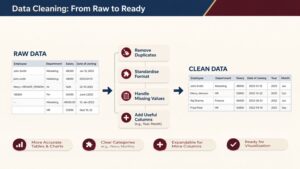
Step 3: Clean and organise the information
Collected data may contain missing entries, duplicate records, inconsistent formats or incorrect values.
Before analysing it, professionals need to prepare the information.
For example, if some transactions record dates as DD-MM-YYYY and others use MM-DD-YYYY, these formats need to be standardized to avoid incorrect analysis.
Step 4: Analyse patterns
Once the information is organised, statistical techniques and programming tools can help identify trends.
The analysis might reveal that customers using mobile devices abandon their carts more frequently when delivery charges appear late in the checkout process.
This is a finding worth investigating further, rather than an automatic explanation of customer behaviour.
Step 5: Build models when required
Machine learning techniques can be used to identify patterns, classify information or estimate future outcomes.
For example, a business may develop a model that estimates which shopping sessions are more likely to result in completed purchases.
Not every Data Science project needs machine learning. Sometimes a simple statistical analysis or well-designed dashboard provides the answer.
Step 6: Communicate the findings
The final stage is explaining the results in a way that decision-makers can understand.
A Data Science professional may prepare a report, visualisation or presentation explaining the important findings and possible improvements.
This stage is essential because technical analysis has limited value if people cannot understand or use the results.
The process demonstrates that Data Science combines technical knowledge with practical problem-solving. The objective is not simply to produce numbers but to answer meaningful questions.
For an additional learning reference, the Government of India’s Data.gov.in provides access to public datasets across different sectors. Exploring these datasets can help beginners understand how real-world information is organised and used for analysis.
The Skills That Help You Make Sense of Data
A successful Data Science professional needs a combination of technical knowledge, analytical thinking and communication skills.
You do not have to master everything immediately. Beginners can develop foundational skills first and gradually move towards advanced topics.
1. Mathematics and statistics
Mathematics provides the foundation for understanding relationships between different variables.
Statistics helps professionals interpret information, identify patterns and evaluate whether an observation is meaningful.
Important concepts include:
- Mean, median and mode.
- Probability and distributions.
- Correlation and regression.
- Hypothesis testing.
- Descriptive and inferential statistics.
- Basic linear algebra.
For example, a retail business may compare monthly sales figures to understand whether revenue is increasing or decreasing.
2. Programming with Python
Python is widely used in Data Science because it supports data manipulation, analysis, visualisation and machine learning.
Beginners should become comfortable with:
- Variables and data types.
- Conditions and loops.
- Functions.
- Lists and dictionaries.
- Working with files.
- Using libraries such as Pandas, NumPy and Matplotlib.
You do not need to become an advanced software developer before beginning data analysis. Start with basic programming and practise using small datasets.
3. SQL and database management
Businesses store information in databases. SQL helps professionals retrieve, filter, organise and combine information from these databases.
For example, a company may use SQL to identify customers who purchased a particular product during the previous month.
Understanding tables, queries, joins and filtering conditions is useful for many data-related positions.
4. Data visualisation
Numbers are easier to understand when presented clearly.
Data visualisation involves converting information into charts, graphs and dashboards that highlight important patterns.
Tools such as Power BI, Tableau and Python visualisation libraries can help professionals present findings.
5. Machine learning fundamentals
Machine learning allows computer systems to identify patterns from data and make predictions or classifications.
Some common areas include:
- Regression.
- Classification.
- Clustering.
- Recommendation systems.
- Model evaluation.
Beginners should first understand statistics and data preparation before moving into complex machine learning algorithms.
6. Critical thinking and problem-solving
A Data Science professional must question the information rather than accept every result immediately.
For example, a sudden increase in sales may appear positive. However, further investigation may reveal that the increase came from a temporary discount rather than sustained customer demand.
Critical thinking helps identify these differences.
7. Communication and business understanding
Technical knowledge is important, but professionals must also explain findings to people who may not understand programming or statistics.
Good communication helps connect analytical results with practical decisions.
The most useful skill combination is therefore not just Python or machine learning. It is the ability to understand a problem, work with information and communicate a meaningful conclusion.
Explore the Different Branches of Data Science
Data Science includes several related specialisations. Although they share common foundations, their responsibilities can differ considerably.
Understanding these areas can help you decide which direction suits your interests.
Data Analytics
Data analytics focuses on examining existing information to understand trends and answer business questions.
A data analyst might investigate monthly sales, customer activity or website performance.
Data Engineering
Data engineering involves building and maintaining systems that collect, process and store information.
Data engineers help ensure that reliable information is available for analysts and other technical teams.
Machine Learning
Machine learning focuses on developing systems that identify patterns and make predictions or classifications using data.
Examples include fraud detection, product recommendations and demand forecasting.
Business Intelligence
Business intelligence involves converting business information into reports, dashboards and insights that support organisational decisions.
Professionals in this area often work with reporting platforms and database systems.
Predictive Analytics
Predictive analytics uses historical information and statistical or machine learning methods to estimate possible future outcomes.
For example, a company may analyse previous sales to forecast upcoming inventory requirements.
How are these specialisations different?
| Specialisation | Main focus | Example application |
| Data Analytics | Understanding existing information | Analysing monthly sales |
| Data Engineering | Building data systems | Organising large databases |
| Machine Learning | Developing predictive models | Product recommendations |
| Business Intelligence | Reporting and decision support | Management dashboards |
| Predictive Analytics | Estimating future outcomes | Demand forecasting |
You do not need to choose a specialisation immediately. Begin with statistics, programming and data analysis. Once you understand the fundamentals, you can explore the area that interests you most.
Choosing Your Educational Route: Which Course Should You Consider?
Education provides the foundation for understanding the technical and analytical concepts used in Data Science.
However, different learners may need different educational pathways.
A student completing higher secondary education may prefer a bachelor’s degree. A graduate may explore postgraduate study, while a working professional may benefit from additional technical training.
When researching IT distance education in bangalore, it is important to distinguish between broad computing qualifications and specialised Data Science training.
A general IT qualification may provide computing fundamentals, while a specialised programme may focus on statistics, Python, SQL, machine learning and data visualisation.
Undergraduate courses
B.Sc in Data Science
A B.Sc programme in Data Science may introduce statistics, mathematics, programming, databases and analytical methods.
It can be a suitable option for students interested in developing a foundation in data-related subjects.
B.Sc in Computer Science
Computer Science programmes generally cover programming, algorithms, databases and computing principles. Students can build additional Data Science skills through specialised projects and training.
BCA
Bachelor of Computer Applications programmes focus on computing, programming and software-related subjects.
BCA distance education may be worth considering for learners seeking a broader computing qualification alongside independent Data Science training.
B.Sc in Mathematics or Statistics
Mathematics and statistics provide a strong analytical foundation. Graduates from these disciplines can develop programming and database knowledge to move towards data-related roles.
Postgraduate courses
M.Sc in Data Science
A specialised postgraduate programme may offer deeper study of statistics, machine learning, data management and analytical methods.
MCA
A Master of Computer Applications provides further education in computing and software-related subjects. Students can complement it with specialised Data Science projects.
For graduates exploring MCA distance education in bangalore, it is important to examine the programme curriculum and confirm whether it supports their intended career direction.
M.Sc in Mathematics or Statistics
These programmes can strengthen mathematical and analytical understanding. Additional programming and machine learning training may help learners move towards specialised data-related careers.
Short-term courses and certifications
Not everyone needs to begin with another full degree.
Short-term learning programmes can help develop specific skills such as Python programming, SQL, data visualisation and introductory machine learning.
The Government of India’s SWAYAM Plus platform lists an Applied Data Science course covering data preprocessing, statistical modelling, machine learning and practical projects.
This type of learning can supplement an academic qualification, particularly for students and professionals looking to strengthen their technical knowledge.
Eligibility and Qualifications: Can You Enter Data Science from Different Backgrounds?
One common question among beginners is whether Data Science is limited to students with a Computer Science or engineering background.
The answer depends on the course and the job role.
Some academic programmes have specific mathematics, science or computing requirements. Other skill-development courses may accept learners from broader educational backgrounds.
Students from Science backgrounds
Students who have studied Mathematics, Statistics, Computer Science or related subjects may find it easier to approach the quantitative aspects of Data Science.
They can explore undergraduate programmes in computer science, statistics or data science, depending on their eligibility.
Students from Commerce backgrounds
Commerce students may already have some familiarity with accounting, business statistics and financial information.
They can build on this foundation by learning Python, SQL and data visualisation.
Business analytics and financial data analysis may be useful areas to explore.
Students from Arts backgrounds
Students from Arts backgrounds can also develop data-related skills.
However, they may need additional preparation in mathematics, statistics and programming before progressing towards advanced technical subjects.
Graduates and working professionals
Graduates from different disciplines can explore suitable postgraduate qualifications or skill-development courses.
For example, someone working in sales may already understand customer behaviour and business reporting. Learning SQL and data visualisation can help them move towards analytical responsibilities.
What should you check before enrolling?
- Whether the course accepts your existing qualification.
- Whether Mathematics or Statistics is compulsory.
- Whether programming experience is required.
- Whether the programme includes practical assignments.
- Whether the institution and qualification meet applicable recognition requirements.
- Whether the course supports your intended academic or professional progression.
Learners exploring a Science distance degree in Bangalore should compare the actual subject combinations, eligibility rules and curriculum instead of selecting a programme based only on its title.
Similarly, students researching a B.Sc correspondence college in Karnataka should verify the institution, programme approval, subject availability and mode of delivery.
The National Qualification Register provides a useful reference for understanding job-oriented learning pathways. Its Data Science qualification listing describes learning in Python, SQL, statistical analysis, predictive modelling and machine learning, along with eligibility and progression details.
Learn by Doing: Beginner Projects That Demonstrate Your Data Skills
Reading about Data Science is useful, but practical experience helps you understand how the concepts work together.
A small project can teach you how to collect information, organise it, identify patterns and communicate results.
You do not need access to expensive software or large corporate databases to begin. Public datasets and basic programming tools are enough for several beginner exercises.
Project 1: Monthly sales analysis
Imagine receiving a spreadsheet containing a retailer’s monthly sales information.
Your task is to identify:
- Which products sell the most?
- Which months have higher sales?
- Which categories generate more revenue?
- Are there noticeable seasonal patterns?
You can use Python and Pandas to organise the information and create charts to communicate your findings.
Project 2: Student attendance analysis
Use a sample dataset containing student attendance records.
You could investigate:
- Attendance percentages.
- Monthly attendance patterns.
- Differences between subjects.
- Possible relationships between attendance and assessment performance.
This project helps beginners understand data cleaning, calculations and visualisation.
Project 3: Customer feedback analysis
Collect or use a sample dataset of customer comments.
Organise the feedback into categories such as positive, neutral and negative.
You can begin with simple keyword-based classification before exploring more advanced natural language processing techniques.
Project 4: Public transport data analysis
Explore publicly available transport information to understand patterns in passenger activity, routes or service usage.
This can introduce you to real-world datasets that may contain missing values, inconsistent entries and different data formats.
What should you include in a project?
A useful project should explain:
- The problem: What question are you trying to answer?
- The dataset: Where did the information come from?
- The preparation: How did you clean and organise it?
- The analysis: Which methods or tools did you use?
- The findings: What patterns did you identify?
- The conclusion: What can someone learn from your results?
A few well-explained projects are often more useful than several unfinished exercises.
For students, graduates and career changers, a portfolio can help demonstrate practical ability when applying for internships or entry-level positions.
Career Opportunities: Where Can Data Science Take You?
Data Science offers several career directions depending on your qualifications, technical knowledge and professional interests.
Some beginners start with reporting or data analysis and gradually move towards more specialised positions.
Others enter through software, database or business-related roles before developing advanced analytical skills.
Popular Data Science job roles
- Data Analyst
A Data Analyst examines information to identify trends and prepare reports.
Responsibilities may include cleaning datasets, writing SQL queries, preparing dashboards and explaining business performance.
- Junior Data Scientist
A Junior Data Scientist assists with data preparation, statistical analysis, model development and research.
The role may involve working with experienced team members to solve specific business or technical problems.
- Business Intelligence Analyst
A Business Intelligence Analyst develops reports and dashboards that help organisations understand their performance.
Knowledge of databases, reporting tools and business processes is useful.
- Data Engineer
A Data Engineer develops and maintains the systems used to collect, process and store information.
This role generally requires stronger programming, database and data infrastructure knowledge.
- Machine Learning Engineer
A Machine Learning Engineer develops and implements machine learning systems.
This position usually requires more advanced programming, mathematical understanding and experience with machine learning frameworks.
- Research Analyst
A Research Analyst examines information to understand trends, prepare findings and support decision-making in areas such as finance, education, markets and public policy.
Comparing career roles
| Job role | Main responsibility | Important skills |
| Data Analyst | Analyse and interpret datasets | SQL, Excel, Python, statistics |
| Junior Data Scientist | Support analytical and predictive projects | Python, statistics, machine learning basics |
| Business Intelligence Analyst | Prepare reports and dashboards | SQL, Power BI, Tableau |
| Data Engineer | Build and maintain data pipelines | Python, SQL, databases |
| Machine Learning Engineer | Develop and deploy ML systems | Python, algorithms, model development |
| Research Analyst | Study trends and prepare findings | Research, statistics, visualisation |
Which industries offer opportunities?
Data-related roles can be found in several sectors.
Banking and financial services: Organisations use data to assess financial risks, understand customer behaviour and monitor transactions.
Healthcare: Hospitals, research organisations and healthcare technology companies analyse information to support planning and research.
Retail and e-commerce: Businesses study customer preferences, product demand, inventory and purchasing patterns.
Information technology: Software and technology companies recruit professionals to develop data platforms, analytics products and machine learning applications.
Education: Institutions and learning platforms can use information to examine student engagement, course performance and learning outcomes.
Manufacturing and logistics: Companies analyse production information, equipment performance, inventory and delivery operations.
The opportunities are not limited to one city or industry. However, the skills and qualifications required can vary significantly between employers.
Salary Expectations and Career Progression in India
Salary is an important consideration when choosing a career, particularly for students investing time and money in higher education.
However, Data Science does not have one fixed salary structure. Compensation depends on the position, experience, technical expertise, industry, organisation and location.
What influences Data Science salaries?
Educational qualifications: Relevant degrees and specialised learning can help candidates meet the requirements of certain positions.
Practical experience: Candidates who have completed meaningful projects or internships may be better prepared to demonstrate their skills.
Technical knowledge: Python, SQL, statistics, machine learning and data visualisation can influence the range of roles available.
Industry: Financial services, technology, consulting and specialised research organisations may have different compensation structures.
Location: Salary levels can vary between metropolitan technology centres and smaller cities.
Understanding career progression
A beginner may initially target data analyst, reporting analyst or junior analytics positions, depending on their preparation.
With experience, additional responsibilities may lead towards data science, business intelligence, data engineering or machine learning specialisations.
The progression is not automatic. It depends on performance, continued learning, technical ability and the availability of suitable opportunities.
Instead of relying on unrealistic salary promises, compare current job advertisements, required experience and disclosed compensation ranges before setting expectations.
For learners, the most important first objective should be developing skills that match actual job responsibilities.
The Future of Data Science: What Is Changing in the Industry?
Data Science continues to evolve as organisations collect more information and adopt new technologies.
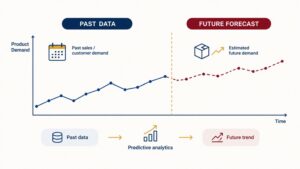
Artificial Intelligence and automation are changing how professionals work with datasets, but they do not remove the need for analytical thinking.
AI-assisted data analysis
AI-powered tools can help professionals explore datasets, generate initial visualisations and assist with programming tasks.
However, users still need to check whether the results are accurate, relevant and supported by reliable information.
Growing importance of data privacy
Organisations must handle personal and business information responsibly.
Professionals need to understand data protection, security, access controls and ethical considerations when collecting or analysing information.
Real-time analytics
Businesses increasingly need to examine information as it is generated.
Examples include monitoring transactions, tracking delivery operations and identifying unusual system activity.
Industry-specific applications
Data Science is becoming relevant to specialised areas such as agriculture, healthcare, financial services, manufacturing and environmental research.
Professionals who understand both analytical methods and a particular industry may be able to contribute more effectively to its problems.
Human judgement remains important
Automated systems can produce predictions and recommendations, but people must interpret the results and understand their limitations.
The ability to ask the right questions, evaluate evidence and communicate findings will remain valuable.
For learners, this means developing a strong foundation rather than depending entirely on the latest software or AI application.
How to Choose the Right Data Science Course for Your Goals
Selecting a course is an important decision because the programme you choose can influence your academic progression and the skills you develop.
Before enrolling, consider your present qualifications, available time, career objectives and preferred learning format.
Check the curriculum
A good Data Science learning pathway should introduce relevant foundations such as:
- Mathematics and statistics.
- Python programming.
- SQL and database management.
- Data cleaning and preparation.
- Data visualisation.
- Machine learning fundamentals.
- Practical assignments and projects.
Advanced programmes may also include cloud platforms, big data technologies and model deployment.
Examine the learning format
Students who can attend regular classes may prefer a conventional learning environment.
Working professionals, graduates and people managing other responsibilities may explore flexible academic options.
When comparing a distance Msc degree college in bangalore, check whether the particular programme is available in the required mode and whether you meet its admission conditions.
Do not assume that every distance programme offers an M.Sc in Data Science or that every computing qualification includes specialised data science subjects.
Verify recognition and programme details
Before making a decision, check:
- The institution’s recognition and applicable approvals.
- The exact degree or qualification awarded.
- Programme duration and eligibility.
- Subject combinations and examination requirements.
- Learning resources and academic support.
- Practical components and project opportunities.
Choose according to your career direction
If you are interested in business reporting, focus on SQL, Excel, statistics and visualisation.
If you prefer predictive modelling, develop mathematics, Python and machine learning knowledge.
If you enjoy working with databases and technical systems, explore database management and data engineering fundamentals.
United Correspondence College can be explored as part of your research into academic learning pathways. Visit UCC to review available programme information and check whether an academic option matches your educational background and objectives.
Remember that a degree and specialised technical training serve different purposes. Your long-term development should combine appropriate academic qualifications with practical projects and continuous learning.
Building a Practical Learning Plan for Your Data Science Journey
Once you have selected an educational direction, the next step is turning your interest into a manageable learning routine.
You do not need to learn Python, SQL, statistics and machine learning simultaneously. A gradual approach can make the subject easier to understand.
Stage 1: Strengthen the foundations
Start with basic mathematics, statistics and logical reasoning.
Understand averages, percentages, probability and simple relationships between variables.
Practise reading tables and interpreting charts before moving into advanced analysis.
Stage 2: Learn a programming language
Begin with Python.
Practise basic syntax, functions, conditions and loops. Once you are comfortable, explore Pandas and NumPy for working with datasets.
Stage 3: Understand databases
Learn SQL and practise retrieving information from sample databases.
Work with filtering, grouping, sorting and joins to understand how organisations manage information.
Stage 4: Create visual reports
Use a tool such as Power BI, Tableau or Matplotlib to convert your findings into understandable charts.
Practice explaining what each visualisation communicates.
Stage 5: Complete practical projects
Choose datasets that interest you and investigate meaningful questions.
Document the steps you followed and explain your findings clearly.
Stage 6: Explore specialisations
Once your foundations are strong, explore machine learning, predictive analytics, data engineering or business intelligence.
This learning journey can be adjusted according to your academic background, available time and career goals.
Conclusion: Turn Your Curiosity About Numbers into a Career Direction
Data Science is about much more than collecting information or writing computer programmes. It involves understanding problems, finding meaningful patterns and using evidence to support better decisions.
From online shopping recommendations to banking systems and healthcare research, data-related methods influence several parts of everyday life. This creates different learning and career pathways for students, graduates, working professionals and individuals considering a career change.
You can begin by strengthening your mathematical understanding, learning Python and SQL, practising data visualisation and completing small projects. As your confidence grows, you can explore specialised areas such as machine learning, business intelligence and data engineering.
Choosing the right academic pathway is equally important. Compare programme eligibility, curriculum, recognition and learning flexibility before enrolling.
If you are exploring IT distance education in Bangalore, take time to identify a qualification that supports your educational goals and complements the practical skills required in the data field.
“Students interested in exploring technology-driven career paths can also learn about various IT career opportunities in India, including the essential skills, courses, and future job prospects. Read our guide on IT Careers in India: Essential Skills, Courses and Future Job Prospects to explore more career options in the IT industry.”
Frequently Asked Questions About Data Science
1. What is Data Science in simple words?
Data Science is the process of using mathematics, statistics, programming and analytical techniques to understand information and solve problems. It helps organisations identify patterns, make predictions and support better decisions.
2. Is Data Science difficult for beginners?
It can be challenging because it combines several subjects, including mathematics, statistics and programming. However, beginners can make progress by learning the fundamentals gradually and practising with simple datasets.
3. Can I study Data Science without a Computer Science background?
Yes. Students from Mathematics, Statistics, Commerce and other backgrounds can explore Data Science, depending on the course requirements. They may need additional preparation in mathematics, statistics and programming.
4. Is Mathematics compulsory for Data Science?
Mathematics and statistics are important foundations, particularly for machine learning and advanced analytical work. However, the exact mathematical requirements vary depending on the course and job role.
5. Which programming language is best for Data Science?
Python is a popular starting point because it offers libraries for data analysis, visualisation and machine learning. SQL is also important for retrieving and managing information from databases.
6. Can I pursue Data Science after BCA?
Yes. BCA graduates can explore specialised Data Science training, relevant postgraduate programmes and practical projects. Their computing foundation can be useful when developing additional analytical skills.
7. What is the difference between Data Science and Data Analytics?
Data Analytics generally focuses on examining existing information to understand trends and answer questions. Data Science covers a broader range of methods, including statistical modelling, predictive analysis and machine learning.
8. Which industries hire Data Science professionals in India?
Technology, banking, healthcare, retail, e-commerce, manufacturing, logistics and education are among the sectors that use data-related skills. Specific job opportunities depend on experience and qualifications.
9. Can working professionals learn Data Science while employed?
Yes. Working professionals can learn through structured courses, flexible academic programmes and independent projects. A consistent study schedule can help them develop skills without immediately leaving their current employment.
10. What projects should beginners include in a Data Science portfolio?
Beginners can start with sales analysis, student attendance analysis, customer feedback classification, public dataset exploration and simple forecasting projects. Each project should explain the problem, dataset, methods and findings.
11. Does a Data Science degree guarantee a job?
No. A degree can provide academic knowledge and qualifications, but employment also depends on practical skills, experience, portfolio quality, communication and employer requirements.
12. Is Data Science a good career choice for the future?
Data Science can offer opportunities for people interested in technology, mathematics, analysis and problem-solving. Its applications across industries make it a relevant area to explore, although career outcomes depend on continuous learning and changing industry requirements.
United Correspondence College encourages learners to explore suitable academic pathways according to their qualifications and future objectives. Visit UCC to review available learning options and contact us through the website if you need further information about programme details and eligibility.
The journey into Data Science does not begin with mastering every tool. It begins with asking a useful question, learning how to investigate it and turning what you discover into something meaningful.