Introduction: Every Machine Has an Engineer Behind It
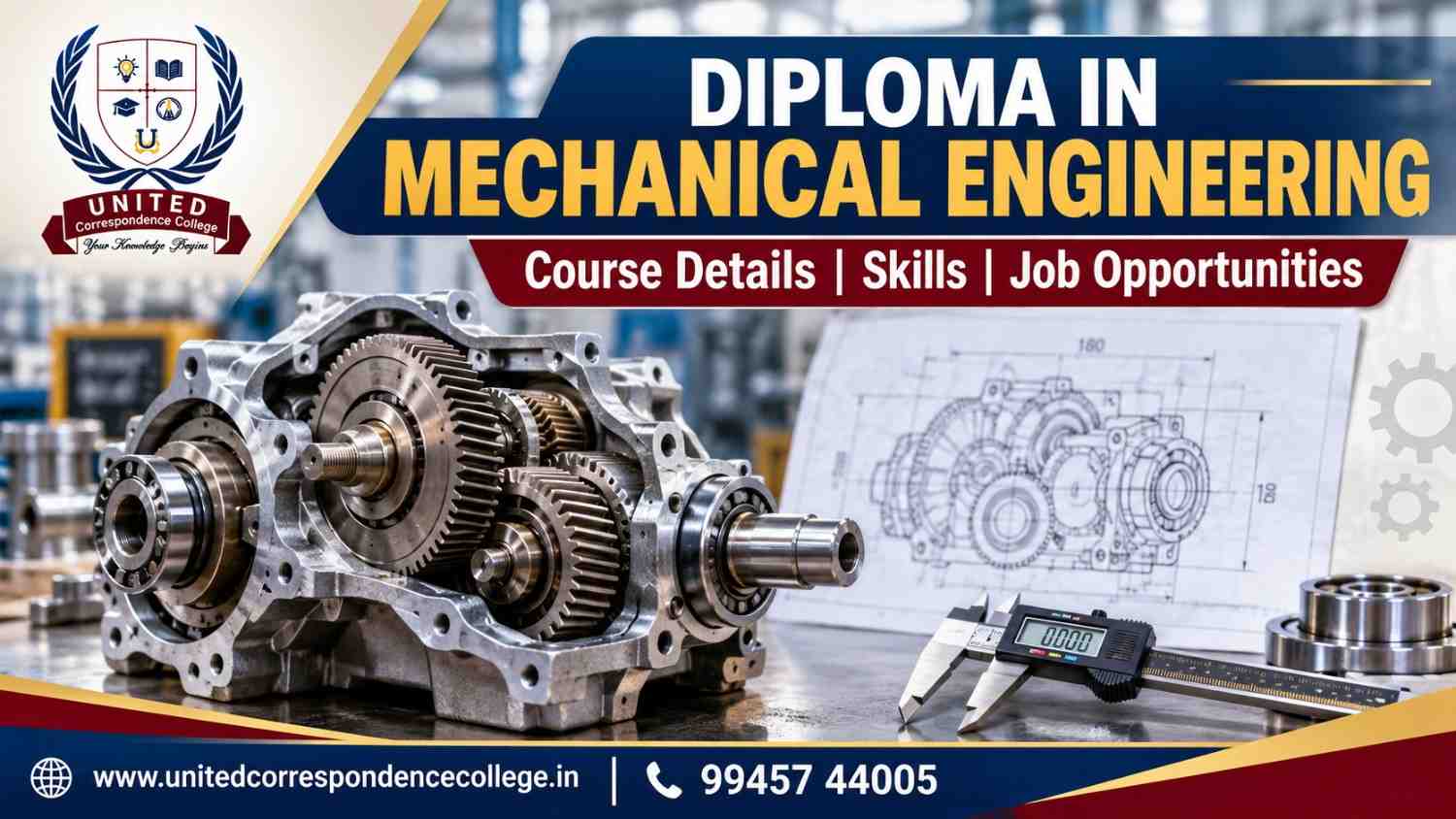
From the vehicles we travel in to the machines used in factories, mechanical systems are part of everyday life. Behind their design, production and maintenance are professionals who understand how machines work. A Diploma in Mechanical Engineering can be a starting point for students who want to enter this technical field and learn about machinery, manufacturing and industrial operations. If you are exploring a Diploma in Engr correspondence college in India, it is equally important to understand the course structure, practical training requirements and permitted mode of study before choosing an institution.
Mechanical engineering is not limited to designing large machines. It also involves solving practical problems, improving production processes, checking equipment and ensuring that mechanical systems operate safely. This makes the field relevant to several industries, including automobiles, manufacturing, construction equipment and energy.
For students who have completed Class 10 or Class 12, working professionals considering a technical qualification, and learners returning to education after a break, understanding the available study routes is an important first step. This guide explains what the diploma covers, the skills you can develop, the jobs you may explore, expected salaries and how to choose an appropriate course.
What Is Diploma in Mechanical Engineering?
A Diploma in Mechanical Engineering is a technical programme that introduces students to the principles behind machines, mechanical components, manufacturing processes and industrial equipment. It combines engineering fundamentals with subjects that explain how products and machinery are designed, produced, operated and maintained.
In simple terms, the course helps students understand how things move, how machines generate or transfer power, why materials behave differently under pressure and how mechanical parts fit together to perform a particular function.
For example, consider a vehicle engine. It contains several components that work together to convert energy into movement. A mechanical engineering student learns about the purpose of these components, the materials used to manufacture them and the processes involved in maintaining them.
The same knowledge is useful in factory equipment, pumps, compressors, production machines, heating and cooling systems and many other applications.
A diploma generally introduces students to areas such as:
- Mechanical engineering fundamentals.
- Engineering drawing and design.
- Manufacturing and production technology.
- Thermodynamics and heat transfer.
- Materials and machine components.
- Industrial maintenance.
- Workshop and practical skills.
The exact subjects, duration and practical requirements depend on the institution and the approved curriculum.
What Will You Actually Learn During the Course?
A mechanical engineering programme becomes easier to understand when you connect its subjects to real situations. Instead of looking at the syllabus as a collection of unfamiliar technical terms, think about the problems mechanical engineers help solve.
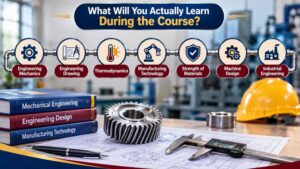
Engineering Mechanics: Understanding Forces and Movement
Why does a heavy machine remain stable? How does a lever make it easier to lift a load? What happens when force is applied to a moving object?
Engineering mechanics introduces students to forces, motion, balance and the behaviour of mechanical systems. These principles are useful when analysing machines, structures and moving components.
Engineering Drawing: Learning to Read Technical Designs
Before a mechanical component is manufactured, its dimensions and shape need to be communicated clearly.
Engineering drawing teaches students how to understand technical diagrams, dimensions, symbols and different views of an object. This skill helps them interpret component drawings and communicate design information.
Thermodynamics: Understanding Heat and Energy
Engines, boilers, refrigeration systems and power plants involve the transfer or conversion of energy.
Thermodynamics introduces students to heat, temperature, energy and the behaviour of gases and other working substances. It helps explain how mechanical systems generate, transfer and use energy.
Manufacturing Technology: How Products Are Made
A finished machine part may begin as a piece of metal or another raw material. It then passes through processes that shape it into the required component.
Manufacturing technology introduces students to processes such as machining, casting, welding, forming and finishing. It helps them understand how raw materials become usable products.
Strength of Materials: Understanding Material Behaviour
Mechanical components experience different forces during operation. Some are stretched, compressed, twisted or bent.
Strength of materials explains how materials respond to these forces and why selecting the correct material is important for safety and performance.
Machine Design: Understanding Mechanical Components
A machine is made up of components that must work together. Machine design introduces the principles behind selecting and designing parts such as shafts, gears, bearings, fasteners and other mechanical elements.
Industrial Engineering: Improving Production
Manufacturing organisations need to manage time, materials, workers and equipment efficiently.
Industrial engineering introduces students to production planning, workflow, quality and the efficient use of resources.
Together, these subjects provide a foundation for understanding mechanical systems and the industries that depend on them.
From Classroom Concepts to Real-World Mechanical Applications
Understanding a subject is one thing; applying it to a practical situation is another. Mechanical engineering connects both.
Imagine a manufacturing unit where a machine suddenly stops working. The maintenance team must identify the cause, examine the affected components and decide how to restore the machine safely. Knowledge of mechanical systems, materials and maintenance procedures helps professionals approach this problem.
Consider a few other examples:
- Automobile servicing: Understanding engines, braking systems, transmission components and vehicle maintenance.
- Manufacturing: Learning how machine tools shape raw materials into finished components.
- Industrial maintenance: Identifying equipment problems and carrying out appropriate maintenance procedures.
- Quality inspection: Checking whether manufactured parts meet specified dimensions and requirements.
- Heating and cooling systems: Understanding the mechanical principles used in air-conditioning and refrigeration equipment.
Practical exposure is particularly important in this field. Workshop activities, laboratory sessions, equipment demonstrations and supervised training help students connect engineering concepts with actual machinery.
When comparing programmes, check how practical learning is organised. Ask about workshop access, laboratory arrangements, assessment methods and any required in-person training. A programme’s delivery mode should not be assumed to replace practical requirements.
Which Type of Mechanical Engineering Course Should You Choose?
Students interested in mechanical engineering can explore different academic pathways depending on their previous education and long-term goals. A diploma, undergraduate engineering degree and postgraduate engineering qualification serve different purposes.
| Course | General Duration | Suitable For |
| Diploma in Mechanical Engineering | Usually 3 years | Students seeking foundational mechanical engineering education |
| B.E./B.Tech in Mechanical Engineering | Usually 4 years | Students pursuing an undergraduate engineering degree |
| M.E./M.Tech in Mechanical Engineering | Usually 2 years | Engineering graduates seeking advanced specialisation |
Note: Durations are general examples. Actual course structures, entry routes and requirements vary by institution and applicable regulations.
Diploma in Mechanical Engineering
A diploma is generally an entry-level technical qualification that introduces students to mechanical engineering principles and applications. It may be suitable for learners who want to begin with foundational engineering subjects and develop technical knowledge.
Students commonly explore this route after Class 10, subject to the admission requirements of the institution.
B.E. or B.Tech in Mechanical Engineering
A bachelor’s degree provides a broader and more in-depth study of engineering. It generally covers advanced technical concepts, design, analysis, manufacturing and related engineering subjects.
Some students consider diploma-to-degree progression through lateral entry, where such admission is permitted under the applicable rules.
M.E. or M.Tech in Mechanical Engineering
A postgraduate engineering qualification is intended for eligible graduates who want to develop advanced knowledge in a specialised area.
Possible specialisations may include manufacturing engineering, thermal engineering, machine design, industrial engineering and related fields. Admission depends on the university’s eligibility and entrance requirements.
An important point about study mode: Students searching for a Diploma in Engr correspondence college in India, a B.Tech correspondence college in India or an M.Tech correspondence college in Karnataka should not assume that every engineering qualification can be completed through correspondence, online or distance education. Engineering programmes have specific regulatory and practical requirements. Always verify the exact programme and permitted mode before paying fees.
Who Can Apply? Eligibility and Entry Requirements
The right entry route depends on your previous education. Students should check the admission rules of the specific institution rather than relying on general assumptions.
After Class 10
Many diploma programmes accept students who have completed Class 10 or an equivalent qualification. Mathematics and Science are commonly relevant subjects, but the exact eligibility criteria, minimum marks and admission process vary by institution and state.
This route may suit students who want to begin technical education soon after school.
After Class 12
Students who have completed Class 12 can explore diploma admission if they meet the institution’s requirements. Depending on their subjects and academic background, they may also consider other undergraduate options.
Some institutions provide entry or credit arrangements for eligible candidates, but these should be confirmed directly.
Working Professionals
People already employed in manufacturing, maintenance, automobile services or technical support may want to strengthen their qualifications.
Before applying, working professionals should check whether their previous education meets the entry requirements and whether the course timetable and practical attendance requirements can fit around their work.
Students Returning to Education
A break in education does not necessarily mean that technical learning is no longer possible. Students who discontinued their studies can review the available admission routes and identify the qualification they need to complete first.
If you have an unusual academic history, confirm eligibility with the institution before making an admission decision.
The Skills That Make a Good Mechanical Engineering Professional
A qualification introduces the technical concepts, but the ability to apply them is what helps a learner prepare for workplace responsibilities. Mechanical engineering professionals need a combination of technical understanding, practical ability and professional skills.
Technical Drawing and Design Understanding
Mechanical professionals often work with diagrams, component drawings and technical specifications. Being able to read dimensions, identify components and understand design information is useful in manufacturing and maintenance environments.
Knowledge of Mechanical Components
Gears, bearings, shafts, pumps, valves and fasteners are used in many mechanical systems. Understanding their functions helps professionals identify components and understand how machines operate.
Problem-Solving and Troubleshooting
A machine may stop because of wear, incorrect alignment, overheating or another technical issue. Professionals need to examine the symptoms, identify possible causes and follow suitable procedures to resolve the problem.
Manufacturing Process Knowledge
Understanding machining, welding, casting, fabrication and other production methods helps learners recognise how components are made and why different manufacturing methods are selected.
Measurement and Inspection Skills
Mechanical components must often meet specific dimensions and tolerances. Basic measurement skills and familiarity with inspection instruments are useful for checking product quality.
Computer-Aided Design (CAD) Knowledge
CAD tools are used to create and modify technical drawings and models. Learning the basics of suitable design software can support future opportunities in drafting, design assistance and manufacturing.
Communication and Teamwork
Mechanical work often involves coordination between production teams, maintenance staff, engineers, supervisors and quality personnel. Clear communication helps reduce mistakes and supports safe working practices.
Safety Awareness and Attention to Detail
Mechanical equipment can involve moving parts, heat, pressure and electrical systems. Understanding workplace safety procedures and following instructions carefully are essential professional habits.
Students can begin developing these abilities during their education and continue improving them through supervised practical exposure and work experience.
What Can You Do After a Diploma in Mechanical Engineering?
One of the most useful things to understand before choosing a course is the kind of work it can lead towards. Mechanical engineering knowledge is used in production facilities, automobile workshops, maintenance departments and manufacturing units.
The actual job title and responsibilities depend on the employer, the candidate’s skills, practical experience and additional qualifications.
Manufacturing and Production
Manufacturing organisations use machines and production systems to make components and finished products. Diploma holders with relevant skills may explore entry-level opportunities such as:
- Production Technician.
- Manufacturing Assistant.
- Production Trainee.
- Production Supervisor Trainee.
These roles may involve supporting production activities, checking machine operations, maintaining records and following manufacturing procedures. Supervisory responsibilities generally require relevant experience and employer-specific training.
Maintenance and Machinery
Factories and industrial facilities depend on equipment that needs regular inspection and maintenance.
Possible entry-level roles include:
- Maintenance Technician.
- Mechanical Maintenance Assistant.
- Service Technician.
- Equipment Maintenance Trainee.
The work may involve inspecting equipment, assisting with repairs, recording maintenance activities and reporting machine faults.
Automobile and Automotive Industries
Mechanical knowledge is relevant to vehicle manufacturing, servicing and component production.
Potential roles include:
- Automobile Technician.
- Service Technician.
- Automotive Production Assistant.
- Workshop Assistant.
These positions may involve vehicle inspection, servicing support, component checks and assisting with repairs, depending on the employer’s requirements.
Quality and Inspection
Manufactured components need to meet required specifications. Quality departments inspect products and identify defects or variations.
Possible roles include:
- Quality Control Technician.
- Inspection Assistant.
- Quality Assurance Trainee.
- Production Quality Assistant.
Attention to detail, measurement skills and the ability to understand technical drawings can be useful in this area.
Where Can Mechanical Engineering Diploma Holders Work?
Mechanical engineering is used across several industries. The same fundamentals of machinery, materials, production and maintenance can be applied in different work environments.
Automobile Manufacturing: Vehicle manufacturers and component suppliers need professionals who understand production equipment, mechanical parts and quality processes.
Industrial Machinery: Companies that manufacture or operate pumps, compressors, machine tools and other equipment require technical support for production and maintenance.
Construction Equipment: Heavy machinery such as cranes, loaders and excavators requires inspection, servicing and maintenance.
Power Generation: Power plants use turbines, pumps, boilers and other mechanical equipment. Technical teams help operate and maintain these systems.
Aerospace Manufacturing: The aerospace sector involves precision manufacturing, material selection and strict quality procedures. Specific job opportunities depend on the role’s qualification and experience requirements.
Oil and Gas: Mechanical systems are used in processing facilities, pipelines, pumps and other industrial equipment. Safety procedures and specialised training are important in this sector.
Production and Fabrication: Fabrication units manufacture metal structures and components using processes such as cutting, welding and forming.
A diploma can provide foundational knowledge for exploring suitable entry-level roles. Progression into specialised or higher-responsibility positions may require further qualifications, training and experience.
What Salary Can You Expect After Completing the Diploma?
Salary is an important consideration when choosing a technical course. However, there is no single salary that every diploma holder can expect. Earnings depend on the job role, industry, location, employer, practical skills and experience.
A fresher entering a production or maintenance role may receive a different salary from someone working in a specialised technical position. Candidates who develop additional skills in areas such as CAD, quality inspection or equipment maintenance may be able to explore different opportunities as their experience grows.
The following figures are broad indicative estimates for career planning, not guaranteed salary offers.
| Career Stage | Indicative Annual Salary |
| Fresher | ₹1.8–₹3 lakh |
| Early-career professional | ₹2.5–₹4.5 lakh |
| Experienced technician or supervisor | ₹4–₹7 lakh |
| Specialised or senior professional | ₹6 lakh or more |
Actual compensation varies across employers and locations. Some organisations may also provide allowances, overtime payments, incentives or other benefits depending on the role.
Instead of focusing only on the starting salary, students should consider the skills they can develop, the experience they can gain and the opportunities available for further education.
Can You Continue Studying After a Diploma?
Completing a diploma does not have to be the end of your education. Depending on your qualification and the applicable admission rules, you may be able to continue studying or develop a more specialised technical skill set.
Explore Eligible Lateral-Entry Options
Some institutions and state admission systems allow eligible diploma holders to enter the second year of an undergraduate engineering programme through lateral entry.
However, eligibility, subject requirements, entrance procedures and available seats vary. Check the current rules of the relevant university or admission authority before planning this route.
Develop Specialised Technical Skills
You can also strengthen your knowledge through additional training in areas such as:
- Computer-Aided Design (CAD).
- Computer-Aided Manufacturing (CAM).
- CNC machine operation.
- Quality inspection.
- Industrial maintenance.
- Welding and fabrication.
- Production planning.
Choose additional training based on the type of work you want to pursue and the requirements of employers in your preferred industry.
Consider Further Academic Qualifications
Students who meet the admission requirements may explore higher qualifications in engineering or related fields. Further study can help develop advanced technical knowledge and support progression towards specialised responsibilities.
One important regulatory point must be understood: engineering programmes such as B.Tech and M.Tech are not permitted through UGC-regulated Open and Distance Learning or online modes. Do not assume that an advertised B.Tech correspondence college in India or M.Tech correspondence college in Karnataka is offering a valid qualification simply because it appears in a course listing.
For reliable information about technical education and institutional approval, refer to the official All India Council for Technical Education (AICTE) and verify the relevant programme and institution.
Is Flexible Learning Suitable for Mechanical Engineering?
Students often look for flexible education because attending a regular college may not be possible for everyone. Working professionals may have job responsibilities, while learners returning after a break may need to balance education with family or other commitments.
This is why searches for an Engineering correspondence college in Bangalore, Engineering distance education and Distance education colleges in Bangalore are common among people exploring technical education options.
However, mechanical engineering is a practical discipline. Students need to understand equipment, workshop processes, measurements, materials and safety procedures. These requirements make it particularly important to examine how a programme delivers practical learning.
Before selecting any flexible programme, consider the following:
- Permitted learning mode: Confirm whether the specific engineering qualification is allowed in the proposed mode of study.
- Awarding institution: Identify the university or institution that will issue the qualification.
- Approval and recognition: Verify the relevant regulatory approvals for the programme and academic session.
- Practical requirements: Understand whether workshop sessions, laboratory activities or supervised training are required.
- Examinations: Check the examination arrangements and attendance conditions.
- Academic support: Review the availability of study materials, student assistance and technical guidance.
The Ministry of Education provides information about India’s technical and higher education framework.
Students should remember that flexibility is valuable only when the programme itself is appropriate, recognised and legally permitted. A course advertised as distance or correspondence engineering should be checked carefully before admission.
How to Choose the Right Diploma Programme
Choosing a programme is not just about finding a college with an attractive fee or convenient admission process. It is about understanding what you will study, what qualification you will receive and whether the course supports your future plans.
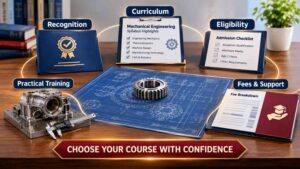
Use the following checklist before making a decision.
- Check the Institution and Qualification
Find out which institution awards the diploma. Verify its status and the applicable approval requirements. Do not rely only on advertisements or verbal assurances.
- Understand the Course Curriculum
Review the subjects and check whether they cover important areas such as engineering drawing, manufacturing, mechanics, materials and maintenance.
- Confirm the Learning Mode
If you are considering correspondence or distance education, verify whether the specific engineering programme is legally permitted through that mode. Do not assume that all technical courses can be completed remotely.
- Review Practical Training Arrangements
Ask how workshop sessions, laboratory activities, equipment demonstrations and practical assessments are conducted.
- Check Eligibility Requirements
Confirm the minimum educational qualification, required subjects, marks and any entrance or admission conditions.
- Compare the Complete Fee Structure
Check tuition fees, examination charges, practical fees, study materials and other expenses. Ask for a clear fee breakdown before paying.
- Understand the Examination Process
Review examination schedules, assessment methods, attendance requirements and the process for completing the qualification.
- Consider Your Career Goals
Think about whether you want to enter manufacturing, automobile services, maintenance, quality inspection or another technical area. Choose a course that gives you a suitable academic foundation for that direction.
A careful comparison can help you avoid unsuitable programmes and make a better-informed education decision.
How United Correspondence College Can Help You Explore Your Education Options
Choosing the right educational route is important for students who want to continue their studies while managing work, family responsibilities or other commitments.
United Correspondence College provides information about educational programmes and learning options for students and working professionals exploring their next academic step.
Before selecting a technical programme, learners should understand the qualification, awarding institution, eligibility conditions, practical requirements and permitted mode of delivery. This is particularly important for mechanical engineering because of its workshop and laboratory components.
Students can explore the available course information, compare their educational options and seek guidance about admission requirements. If you are unsure which academic route matches your previous qualification, it is sensible to clarify your eligibility before applying.
The objective should be to choose a suitable and valid educational pathway rather than selecting a course only because it is advertised as flexible or convenient.
Conclusion: Build Your Future One Technical Skill at a Time
Mechanical engineering plays an important role in the way products are designed, machines are operated and industries function. A diploma can introduce students to the fundamentals of mechanics, manufacturing, materials, machine components and maintenance.
For Class 10 and Class 12 students, it can be a starting point for technical education. Working professionals may use further learning to strengthen their knowledge, while students returning to education can explore the admission routes available to them.
However, choosing the right programme requires more than comparing course names and fees. You should examine the curriculum, practical training, eligibility, awarding institution and regulatory requirements. This is especially important when considering correspondence or distance-based engineering options.
If you are exploring a Diploma in Engr correspondence college in India, take time to verify the programme before making a decision. A well-chosen educational pathway, supported by practical skills and continuous learning, can help you work towards a meaningful career in the mechanical engineering field.
“Choosing the right course is an important step towards building a successful career. Explore these 10 essential things students should check before choosing a distance education course to make an informed academic decision.”
Frequently Asked Questions (FAQs)
1. What is a Diploma in Mechanical Engineering?
A Diploma in Mechanical Engineering is a technical programme that introduces students to machines, manufacturing, mechanical components, materials, engineering drawing and maintenance. It helps learners understand the basic principles used in mechanical and industrial applications.
2. What is the duration of a Diploma in Mechanical Engineering?
A conventional Diploma in Mechanical Engineering is generally three years after Class 10. The duration and entry route may differ depending on the institution and admission system.
3. Can I join a Diploma in Mechanical Engineering after Class 10?
Yes. Many diploma programmes accept students who have completed Class 10 or an equivalent qualification. However, minimum marks, subject requirements and admission procedures vary between institutions.
4. What subjects are taught in a Diploma in Mechanical Engineering?
Common subjects include engineering mechanics, engineering drawing, thermodynamics, manufacturing technology, strength of materials, machine design and industrial engineering. The exact syllabus depends on the institution and curriculum.
5. What jobs can I get after a Diploma in Mechanical Engineering?
Depending on your skills and employer requirements, you may explore roles such as production technician, maintenance technician, automobile technician, quality control technician, manufacturing assistant and service technician.
6. What is the salary after a Diploma in Mechanical Engineering in India?
Entry-level salaries vary by employer, industry, location and practical skills. A broad indicative range for freshers may be around ₹1.8 lakh to ₹3 lakh annually, although actual offers can be lower or higher.
7. Can I study B.Tech after a Diploma in Mechanical Engineering?
Eligible diploma holders may be able to enter the second year of a B.E. or B.Tech programme through lateral entry, where the university or state admission system permits it. Check the current eligibility and admission rules.
8. Can I pursue Mechanical Engineering through distance education?
Engineering programmes have specific regulatory and practical requirements. B.Tech and M.Tech programmes are prohibited through UGC-regulated ODL and online modes. Always verify the exact qualification and its permitted mode of delivery through official sources before admission.
9. Is Mathematics important for Mechanical Engineering?
Yes. Mathematics is useful for understanding engineering mechanics, measurements, calculations, machine design and other technical subjects. The specific academic requirements depend on the programme.
10. Is a Diploma in Mechanical Engineering a good option for working professionals?
It may be useful for working professionals who want to develop technical knowledge or explore a new career direction. However, they should check the admission requirements, practical attendance conditions and permitted learning mode before choosing a programme.
Take the Next Step Towards Your Engineering Career!
A career in mechanical engineering begins with the right knowledge, practical skills and educational choices. Whether you are a student planning your future, a working professional looking to upgrade your qualifications or someone returning to education, take time to explore the learning options that match your goals.
Connect with United Correspondence College to understand available courses, eligibility requirements and suitable academic pathways. Choose an educational route that meets the relevant recognition and regulatory requirements.
Visit www.unitedcorrespondence college.in or call 99457 44005 to get more information and admission guidance.