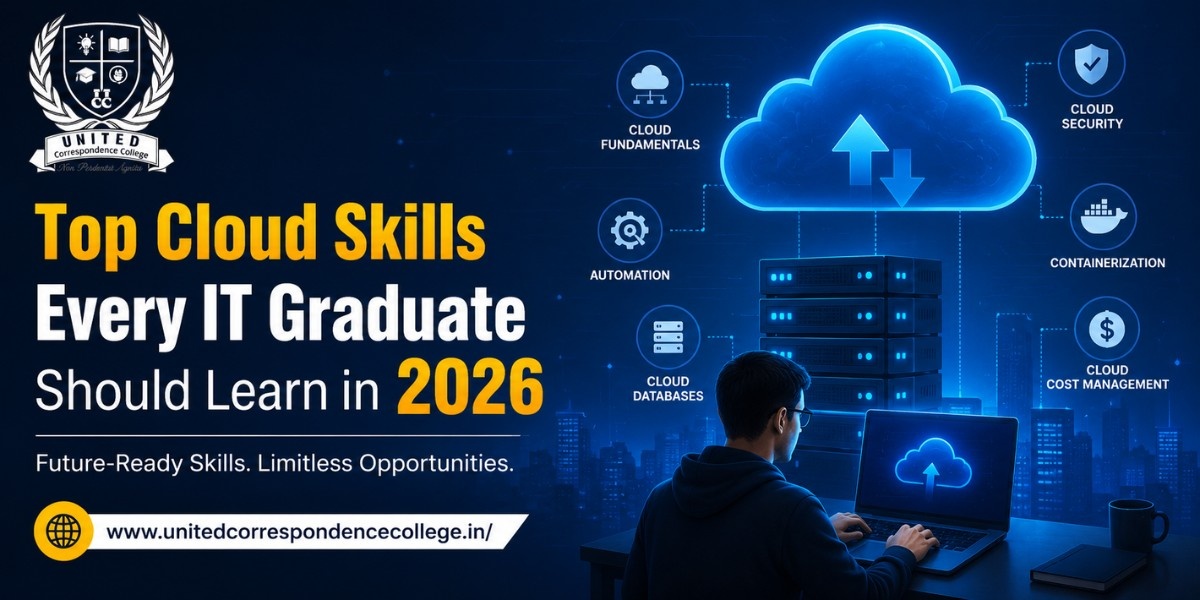
Top Cloud Skills Every IT Graduate should master are becoming one of the biggest career differentiators in 2026. As organizations rapidly migrate their applications, databases, and business operations to cloud platforms, professionals with cloud expertise are in greater demand than ever before. Whether you dream of becoming a Cloud Engineer, DevOps Engineer, Cloud Architect, or Solutions Consultant, developing the Top Cloud Skills Every IT Graduate needs will open doors to exciting career opportunities across industries. This guide explores the most valuable cloud skills, certifications, tools, and career paths that every IT graduate should start learning today to stay competitive in the modern technology landscape.
What is Cloud Computing?
Cloud computing is the delivery of computing services such as servers, storage, databases, networking, software, analytics, and Artificial Intelligence over the internet. Instead of purchasing expensive physical infrastructure, businesses can access cloud resources whenever required and pay only for what they use.
Today, almost every modern company relies on cloud platforms to build applications, store customer information, manage business operations, and scale services efficiently. This widespread adoption has made Top Cloud Skills Every IT Graduate an essential requirement for students planning careers in Information Technology.
Popular cloud providers include:
- Amazon Web Services (AWS)
- Microsoft Azure
- Google Cloud Platform (GCP)
- Oracle Cloud Infrastructure
- IBM Cloud
Cloud computing offers businesses:
- Lower infrastructure costs
- Better security
- Faster deployment
- High scalability
- Automatic updates
- Global accessibility
- Improved disaster recovery
As cloud adoption continues growing worldwide, companies actively recruit graduates who understand cloud technologies and can work with cloud-based applications.
Cloud Service Models
| Cloud Service | Purpose | Popular Examples |
| IaaS | Virtual infrastructure | AWS EC2, Azure VM |
| PaaS | Application development | Google App Engine |
| SaaS | Ready-to-use software | Microsoft 365, Salesforce |
| Serverless | Run applications without managing servers | AWS Lambda |
Each service model requires different technical expertise, making it important for students to gradually build the Top Cloud Skills Every IT Graduate should possess.
Why Cloud Skills Matter in 2026?
Cloud computing is no longer an optional technology—it has become the foundation of digital transformation. Organizations of every size now depend on cloud platforms to manage applications, customer data, security, and business operations.
Here are the biggest reasons why learning Top Cloud Skills Every IT Graduate needs is so important.
Increasing Demand Across Industries
Cloud professionals are required in:
- Information Technology
- Banking
- Healthcare
- Manufacturing
- Retail
- Education
- Government
- E-commerce
- Telecommunications
As businesses continue moving toward cloud-first strategies, the demand for skilled cloud professionals keeps increasing.
High-Paying Career Opportunities
Cloud computing remains one of the highest-paying domains in IT.
Companies actively hire professionals for roles such as:
- Cloud Engineer
- DevOps Engineer
- Cloud Administrator
- Solutions Architect
- Cloud Security Engineer
- Site Reliability Engineer
Professionals who develop the Top Cloud Skills Every IT Graduate should learn often enjoy faster career growth and excellent salary potential.
AI and Cloud Work Together
Artificial Intelligence and cloud computing now go hand in hand. AI applications require cloud infrastructure for data storage, model training, deployment, and scalability.
Cloud providers now offer built-in AI services including:
- Machine Learning
- Data Analytics
- Speech Recognition
- Image Processing
- Natural Language Processing
Students who understand both cloud technologies and AI gain a significant competitive advantage in the job market.
Businesses Prefer Cloud Infrastructure
Organizations increasingly avoid purchasing expensive physical servers.
Instead, they use cloud services for:
- Data backup
- Application hosting
- Virtual machines
- Cybersecurity
- Database management
- Software deployment
This shift makes Top Cloud Skills Every IT Graduate an essential investment for future career success.
Students pursuing BCA distance education can begin learning cloud fundamentals alongside programming, databases, and networking, helping them build practical expertise before entering the workforce.
Top Cloud Skills Every IT Graduate Should Learn
Developing cloud expertise requires learning both technical concepts and practical implementation. The following skills form the foundation of successful cloud careers.
1. Cloud Fundamentals
Before working with advanced cloud technologies, students should understand the core concepts of cloud computing.
Important topics include:
- Cloud architecture
- Public cloud
- Private cloud
- Hybrid cloud
- Multi-cloud
- Virtualization
- Cloud storage
A strong understanding of these basics helps students build the Top Cloud Skills Every IT Graduate should master before pursuing advanced certifications.
2. Amazon Web Services (AWS)
AWS remains the world’s largest cloud platform and powers millions of websites, applications, and enterprise systems.
Students should become familiar with services like:
- EC2
- S3
- IAM
- RDS
- VPC
- Lambda
- CloudWatch
AWS knowledge is one of the most valuable Top Cloud Skills Every IT Graduate can develop because many organizations rely heavily on Amazon’s cloud ecosystem.
3. Microsoft Azure
Microsoft Azure is widely used by enterprises for cloud infrastructure, virtual machines, networking, databases, Artificial Intelligence, and hybrid cloud solutions.
Students should understand:
- Azure Virtual Machines
- Azure Storage
- Azure Active Directory
- Azure Functions
- Azure Networking
Learning Azure expands career opportunities, especially in organizations using Microsoft technologies.
Students enrolled in an IT correspondence college in Bangalore can combine academic learning with Microsoft Azure certifications to strengthen their technical profiles and improve employability in enterprise IT environments.
4. Google Cloud Platform (GCP)
Google Cloud has become increasingly popular because of its strengths in Artificial Intelligence, big data, Kubernetes, and cloud-native application development.
Students should explore:
- Google Compute Engine
- Cloud Storage
- BigQuery
- Kubernetes Engine
- Vertex AI
Understanding multiple cloud platforms makes graduates more adaptable and strengthens the Top Cloud Skills Every IT Graduate needs in today’s multi-cloud job market.
5. Cloud Networking
Cloud infrastructure depends heavily on networking. Without a solid understanding of networking concepts, managing cloud environments becomes difficult. This is why cloud networking is one of the Top Cloud Skills Every IT Graduate should develop.
Students should learn:
- Virtual Private Cloud (VPC)
- IP Addressing
- DNS
- VPN
- Load Balancers
- Firewalls
- Routing
- Network Security Groups
Strong networking knowledge enables professionals to design secure and scalable cloud architectures that support modern applications.
6. Linux Administration
Linux powers a large percentage of cloud servers worldwide. Whether you work with AWS, Microsoft Azure, or Google Cloud, Linux skills remain essential.
Students should understand:
- Linux Commands
- File Management
- User Administration
- Shell Scripting
- Process Management
- Package Installation
- System Monitoring
Learning Linux significantly strengthens the Top Cloud Skills Every IT Graduate needs because most enterprise cloud environments run on Linux-based operating systems.
7. Cloud Security
Security remains one of the highest priorities in cloud computing. Organizations need professionals who can protect sensitive information, prevent cyberattacks, and maintain regulatory compliance.
Important cloud security concepts include:
- Identity & Access Management (IAM)
- Multi-Factor Authentication (MFA)
- Encryption
- Security Policies
- Backup & Recovery
- Compliance Standards
- Threat Monitoring
Students pursuing MCA distance education in Bangalore can combine cloud security knowledge with software development skills to prepare for careers in Cloud Security Engineering, DevSecOps, and Cybersecurity.
8. Docker & Kubernetes
Modern cloud applications use containers instead of traditional deployment methods. Docker and Kubernetes have become industry standards for application deployment and orchestration.
Students should learn:
- Docker Containers
- Docker Images
- Kubernetes Pods
- Deployments
- Services
- Scaling Applications
Companies increasingly expect graduates to understand container technologies, making them one of the most valuable Top Cloud Skills Every IT Graduate can acquire.
9. Infrastructure as Code (Terraform)
Instead of manually creating cloud resources, organizations automate infrastructure using Infrastructure as Code (IaC).
Terraform is among the most popular IaC tools.
Students should understand:
- Terraform Basics
- Configuration Files
- Resource Management
- Infrastructure Automation
- Version Control
Learning Terraform improves automation capabilities and prepares students for DevOps and Cloud Engineering roles.
10. Cloud DevOps
Cloud and DevOps work together to accelerate software development and deployment. Understanding DevOps practices is one of the Top Cloud Skills Every IT Graduate should focus on in 2026.
Students should become familiar with:
- CI/CD Pipelines
- Git & GitHub
- Jenkins
- GitHub Actions
- Monitoring Tools
- Automated Deployment
Cloud DevOps skills help organizations release software faster while maintaining reliability and security.
Students enrolled in IT distance education programs can gradually build expertise in DevOps tools alongside cloud computing concepts, making them more competitive in today’s technology-driven job market.
Cloud Skills Boost
Building cloud expertise requires more than watching online tutorials. Students should focus on continuous practice, certifications, and real-world projects to achieve a meaningful Cloud Skills Boost.
Here are some effective ways to strengthen your cloud knowledge:
Build Personal Projects
Create projects such as:
- Personal Portfolio Website on AWS
- Cloud File Storage Application
- Virtual Linux Server
- Cloud Database Project
- Serverless Application
- Cloud Monitoring Dashboard
Practical projects demonstrate your understanding of the Top Cloud Skills Every IT Graduate should master and make your resume more attractive to recruiters.
Practice Using Free Cloud Resources
Major cloud providers offer free learning environments.
Examples include:
- AWS Free Tier
- Microsoft Azure Free Account
- Google Cloud Free Tier
These platforms allow students to experiment with cloud services without significant financial investment.
Learn Git and Version Control
Cloud professionals frequently collaborate on projects using Git.
Students should learn:
- Git Basics
- GitHub
- Branching
- Pull Requests
- Repository Management
Version control is an essential supporting skill for cloud engineering.
Join Cloud Communities
Participating in technology communities helps students stay updated with the latest cloud trends.
Useful communities include:
- AWS Community Builders
- Microsoft Learn Community
- Google Cloud Community
- GitHub
- Stack Overflow
Networking with professionals also creates opportunities for internships and mentorship.
Students pursuing bca distance education in Bangalore can combine academic studies with these learning communities to gain practical exposure, industry knowledge, and valuable career guidance.
Best Cloud Certifications Every Student Should Consider
Professional certifications validate technical knowledge and improve employability. While practical skills are most important, certifications demonstrate your commitment to continuous learning.
Some of the best beginner-friendly certifications include:
- AWS Certified Cloud Practitioner
- Microsoft Azure Fundamentals (AZ-900)
- Google Associate Cloud Engineer
- CompTIA Cloud+
- Oracle Cloud Infrastructure Foundations
These certifications cover cloud architecture, networking, storage, virtualization, security, and deployment, helping students strengthen the Top Cloud Skills Every IT Graduate needs for entry-level cloud roles.
Best Cloud Certifications
| Certification | Best For | Skill Level |
| AWS Certified Cloud Practitioner | AWS Beginners | Beginner |
| Microsoft Azure AZ-900 | Azure Fundamentals | Beginner |
| Google Associate Cloud Engineer | Google Cloud | Intermediate |
| CompTIA Cloud+ | Cloud Infrastructure | Intermediate |
| Oracle Cloud Foundations | Oracle Cloud | Beginner |
Practical Learning Roadmap
To master the Top Cloud Skills Every IT Graduate should learn, follow this roadmap:
- Learn cloud computing fundamentals.
- Study networking and Linux basics.
- Choose one cloud platform (AWS, Azure, or GCP).
- Practice with free cloud accounts.
- Learn Docker and Kubernetes.
- Explore Terraform and automation.
- Build two or three cloud-based projects.
- Earn an entry-level cloud certification.
- Create a GitHub portfolio showcasing your work.
Students studying through distance education in Bangalore can comfortably follow this roadmap while balancing academics, work, or other responsibilities, gradually building the practical cloud expertise employers seek.
Cloud Computing Skills
Mastering Cloud Computing Skills is no longer optional for IT graduates. As businesses adopt cloud-first strategies, employers seek professionals who understand cloud infrastructure, security, automation, networking, and deployment. Building these skills not only improves technical knowledge but also opens the door to high-paying careers across multiple industries.
Below are the most important cloud computing competencies every student should develop.
1. Understand Cloud Architecture
Every cloud professional should know how cloud infrastructure is designed.
Learn concepts such as:
- Compute services
- Virtual Machines
- Storage
- Networking
- Databases
- Load Balancers
- Availability Zones
A strong understanding of cloud architecture forms the foundation of the Top Cloud Skills Every IT Graduate should develop before working on enterprise projects.
2. Learn Cloud Storage & Databases
Cloud platforms provide scalable storage solutions for businesses.
Students should explore:
- Object Storage
- Block Storage
- File Storage
- SQL Databases
- NoSQL Databases
- Backup Services
These services are widely used in software applications and enterprise systems.
3. Develop Automation Skills
Modern organizations automate repetitive cloud tasks to improve efficiency.
Students should practice:
- Infrastructure Automation
- Scheduled Backups
- Automated Deployments
- Monitoring
- Scaling Applications
Automation is becoming one of the most valuable Cloud Computing Skills for cloud engineers and DevOps professionals.
4. Learn Cloud Monitoring
Monitoring ensures cloud applications remain healthy and available.
Popular monitoring tools include:
- AWS CloudWatch
- Azure Monitor
- Google Cloud Operations Suite
- Grafana
- Prometheus
Monitoring skills help organizations identify issues before they impact customers.
5. Improve Problem-Solving Skills
Technical knowledge alone is not enough.
Cloud professionals frequently troubleshoot:
- Server failures
- Network issues
- Security incidents
- Storage problems
- Performance bottlenecks
Strong analytical thinking makes graduates more valuable to employers.
Students pursuing IT correspondence college in Bangalore programs can strengthen these practical problem-solving abilities alongside academic learning by working on cloud labs, virtual environments, and industry projects.
Career Opportunities After Learning Cloud Skills
Organizations across the world continue investing heavily in cloud computing, creating thousands of new job opportunities every year. Professionals with the Top Cloud Skills Every IT Graduate should learn enjoy excellent career growth, attractive salaries, and global employment opportunities.
Popular career options include:
Cloud Engineer
Designs, deploys, and manages cloud infrastructure for businesses.
Cloud Administrator
Maintains cloud resources, user access, security settings, and cloud performance.
Cloud Solutions Architect
Designs enterprise cloud solutions that improve scalability, security, and business efficiency.
DevOps Engineer
Combines cloud platforms with automation tools to streamline software development and deployment.
Site Reliability Engineer (SRE)
Ensures cloud systems remain highly available, secure, and reliable.
Cloud Security Engineer
Protects cloud infrastructure against cyber threats and ensures compliance with security standards.
Cloud Consultant
Helps organizations migrate from traditional infrastructure to cloud-based solutions.
Cloud Support Engineer
Provides technical support, troubleshooting, and optimization for cloud environments.
Students who develop the Top Cloud Skills Every IT Graduate needs will find opportunities across banking, healthcare, software development, education, retail, telecommunications, manufacturing, and government sectors.
Future Scope of Cloud Computing in 2026
Cloud computing continues to evolve rapidly, making it one of the most future-proof career domains in Information Technology.
Some major trends shaping the future include:
Artificial Intelligence + Cloud
AI applications increasingly depend on cloud platforms for model training, deployment, and data storage.
Multi-Cloud Environments
Organizations now use multiple cloud providers instead of relying on a single vendor.
Professionals who understand AWS, Azure, and Google Cloud have greater career flexibility.
Serverless Computing
Businesses increasingly deploy applications without managing physical servers.
This simplifies development while reducing operational costs.
Cloud Automation
Automation tools continue replacing manual infrastructure management.
Cloud engineers who understand automation will remain in high demand.
Edge Computing
Processing data closer to users improves application speed and reduces latency.
Edge computing is becoming increasingly important for IoT, healthcare, manufacturing, and smart cities.
Cloud Security
As cloud adoption increases, protecting cloud infrastructure becomes even more critical.
Professionals specializing in cloud security will continue enjoying strong demand worldwide.
Students enrolled in MCA distance education in Bangalore can combine cloud certifications, software development, and security knowledge to prepare for advanced roles in cloud engineering, DevOps, Artificial Intelligence, and enterprise technology.
Why Choose UCC for Your Cloud Computing Career?
Building a successful cloud career requires more than theoretical knowledge—it requires recognized education, practical exposure, and continuous skill development. UCC (United Correspondence College) provides flexible academic programs that help students prepare for today’s rapidly evolving IT industry.
Whether you’re pursuing BCA distance education, looking for IT distance education, or planning higher studies through MCA distance education in Bangalore, UCC offers programs designed to help students balance education with work and personal commitments.
Beyond academic qualifications, UCC encourages students to develop practical cloud expertise through certifications, hands-on projects, Linux practice, networking fundamentals, and cloud platforms like AWS, Microsoft Azure, and Google Cloud. Students pursuing distance education in Bangalore can enhance their employability by combining recognized degrees with industry-ready cloud computing skills.
As organizations continue embracing digital transformation, graduates who master the Top Cloud Skills Every IT Graduate should learn will be well-positioned for successful careers in cloud engineering, DevOps, cybersecurity, Artificial Intelligence, and enterprise IT infrastructure.
Conclusion
Cloud computing has become one of the most valuable technologies shaping the future of the IT industry. Organizations worldwide are seeking professionals who can manage cloud infrastructure, secure digital environments, automate deployments, and build scalable applications. By learning the Top Cloud Skills Every IT Graduate should master, students can improve their technical expertise, earn globally recognized certifications, and qualify for high-paying careers in Cloud Engineering, DevOps, Cloud Security, and Solutions Architecture.
Whether you are just beginning your cloud journey or planning to specialize in advanced cloud technologies, consistent learning, hands-on practice, and real-world projects will help you stay ahead in the competitive job market. Investing in cloud computing today is an investment in a successful and future-ready IT career.
Start Your Cloud Computing Journey with UCC
If you’re planning to build a successful career in Information Technology, choosing the right educational path is just as important as learning technical skills.
At UCC (United Correspondence College), students can pursue flexible programs like BCA distance education, MCA distance education in Bangalore, IT correspondence college in Bangalore, and IT distance education while developing industry-ready cloud computing expertise. By combining recognized academic qualifications with cloud certifications and practical projects, you’ll be better prepared for today’s competitive technology careers.
Take the first step today and prepare for a future in Cloud Computing, Artificial Intelligence, DevOps, and Digital Technologies with UCC.
FAQs
1. What are the most important cloud skills every IT graduate should learn?
The most valuable Top Cloud Skills Every IT Graduate should develop include cloud fundamentals, Linux administration, networking, cloud security, AWS, Microsoft Azure, Google Cloud Platform, Docker, Kubernetes, Infrastructure as Code (Terraform), and DevOps. These skills help students build scalable applications, manage cloud infrastructure, and automate deployments. Employers increasingly seek graduates with both theoretical knowledge and practical cloud experience. Students pursuing BCA distance education can strengthen their career prospects by combining academic studies with cloud certifications, personal projects, and hands-on practice using platforms like AWS and Microsoft Azure.
2. Which cloud platform should beginners learn first?
For beginners, Amazon Web Services (AWS) is often the best starting point because it dominates the global cloud market and provides extensive learning resources. Microsoft Azure is ideal for students interested in enterprise environments, while Google Cloud Platform (GCP) is popular for AI, data analytics, and Kubernetes. Instead of learning every platform simultaneously, focus on one and gradually expand your expertise. Students enrolled in an IT correspondence college in Bangalore can enhance their learning by earning beginner certifications while applying cloud concepts through practical labs and real-world projects.
3. Do I need programming knowledge to learn cloud computing?
Basic programming knowledge is helpful but not mandatory when starting cloud computing. Beginners can first learn cloud architecture, Linux, networking, storage, and virtualization before exploring automation and scripting. As you progress, learning Python, Bash, or PowerShell can make cloud management and automation much easier. Practical skills become increasingly valuable as you move into advanced cloud engineering roles. Students pursuing IT distance education can gradually develop programming and cloud skills together, creating a strong technical foundation for future careers.
4. Which cloud certification is best for beginners?
AWS Certified Cloud Practitioner, Microsoft Azure Fundamentals (AZ-900), Google Associate Cloud Engineer, CompTIA Cloud+, and Oracle Cloud Infrastructure Foundations are among the best beginner-friendly certifications. These certifications validate your understanding of cloud concepts, infrastructure, networking, and security. While certifications improve your resume, employers also value hands-on experience and project work. Students pursuing MCA distance education in Bangalore can significantly improve their employability by combining academic qualifications with recognized cloud certifications and practical cloud-based applications.
5. How long does it take to learn cloud computing?
The learning timeline depends on your consistency and goals. Most beginners can understand cloud fundamentals within two to three months through regular study and practice. Building advanced expertise in cloud architecture, automation, Kubernetes, DevOps, and cloud security may require six to twelve months of continuous learning. Working on personal projects and certification preparation accelerates skill development. Students enrolled in bca distance education in Bangalore can comfortably balance cloud learning with their academic schedule while steadily building industry-ready expertise.
6. Is cloud computing a good career in 2026?
Yes. Cloud computing remains one of the fastest-growing career domains because businesses continue migrating applications and infrastructure to cloud platforms. Organizations require professionals skilled in cloud architecture, DevOps, automation, networking, and cloud security. Career opportunities exist across healthcare, finance, e-commerce, government, education, and technology sectors. Professionals with practical cloud expertise often enjoy competitive salaries and global job opportunities. Students pursuing distance education in Bangalore can prepare for these opportunities by combining flexible education with practical cloud learning and industry certifications.
7. What jobs can I get after learning cloud computing?
Cloud computing opens doors to several rewarding careers, including Cloud Engineer, Cloud Administrator, DevOps Engineer, Cloud Solutions Architect, Cloud Consultant, Site Reliability Engineer, Cloud Security Engineer, and Cloud Support Engineer. These roles involve designing, managing, securing, and optimizing cloud environments for businesses. Employers value candidates who demonstrate technical knowledge alongside hands-on project experience. Students completing BCA distance education while developing practical cloud skills can improve their chances of securing internships and entry-level positions in leading IT companies.
8. How can students practice cloud skills for free?
Many cloud providers offer free learning resources and trial environments for beginners. AWS Free Tier, Microsoft Azure Free Account, and Google Cloud Free Tier allow students to practice virtual machines, storage, networking, databases, and deployment without significant costs. Combining these platforms with GitHub projects, Linux practice, and cloud certification courses helps build a strong portfolio. Students studying through an IT correspondence college in Bangalore can use these free resources to gain practical experience and showcase real-world cloud projects to future employers.