
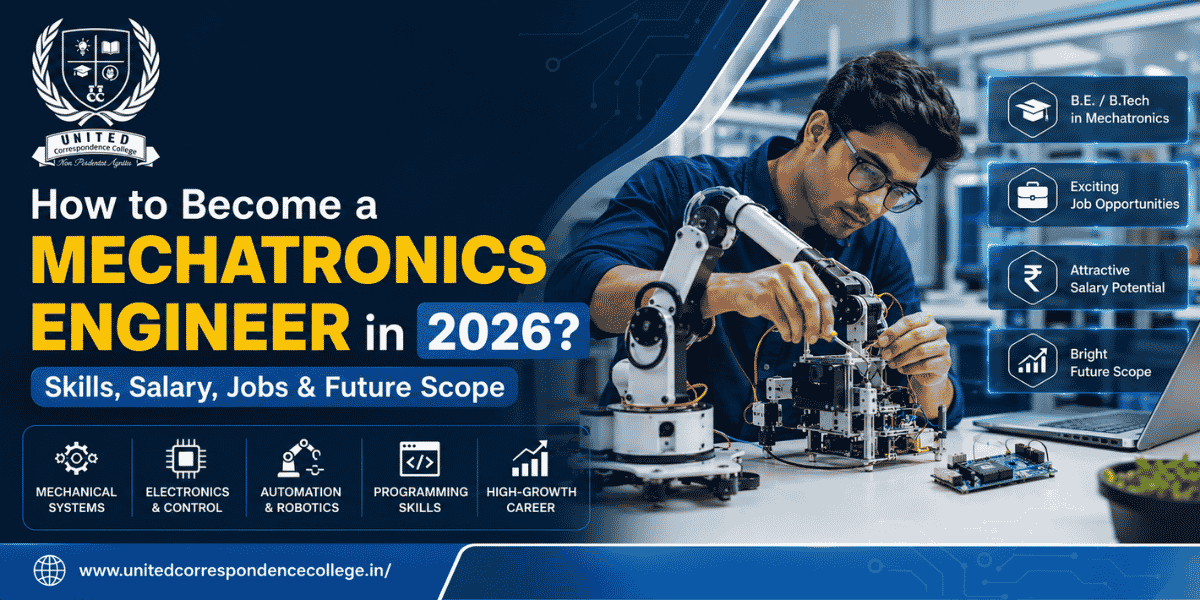
The demand for Mechatronics Engineer in 2026 is growing rapidly as industries embrace automation, robotics, Artificial Intelligence (AI), smart manufacturing, and Industry 4.0 technologies. From self-driving vehicles and robotic arms to advanced healthcare equipment and industrial automation systems, mechatronics engineers are shaping the future of engineering. If you’re planning to build a rewarding engineering career, becoming a Mechatronics Engineer in 2026 can offer excellent job opportunities, competitive salaries, and global career prospects. This guide explains everything you need to know—from required skills and educational qualifications to career paths, salary expectations, top recruiters, and future scope—helping you confidently start your journey toward becoming a successful mechatronics professional.
What is a Mechatronics Engineer?
A Mechatronics Engineer is a multidisciplinary professional who combines mechanical engineering, electronics, computer science, robotics, automation, and control systems to design intelligent machines and automated solutions. Unlike traditional engineering roles that focus on one discipline, mechatronics engineers integrate multiple technologies to create smart products capable of performing complex tasks with minimal human intervention.
Today, organizations across manufacturing, automotive, aerospace, healthcare, consumer electronics, renewable energy, and industrial automation rely on Mechatronics Engineer in 2026 professionals to develop innovative products that improve efficiency, precision, and productivity.
Some common responsibilities include:
- Designing automated machines and robotic systems
- Developing embedded control systems
- Programming PLCs and industrial controllers
- Integrating sensors and actuators
- Troubleshooting automation equipment
- Testing mechanical and electronic components
- Improving production efficiency
- Maintaining intelligent manufacturing systems
As smart technologies continue evolving, the role of a Mechatronics Engineer in 2026 is becoming increasingly valuable across industries worldwide.
Why Choose Mechatronics Engineering in 2026?
Technology is transforming industries at an unprecedented pace. Businesses are investing heavily in automation, AI-powered manufacturing, robotics, autonomous vehicles, and Industrial Internet of Things (IIoT), creating enormous demand for qualified mechatronics engineers.
Here are some reasons why pursuing a career as a Mechatronics Engineer in 2026 is an excellent decision:
High Industry Demand
Companies worldwide are adopting automation technologies to increase productivity and reduce operational costs. This has significantly increased the need for engineers skilled in robotics and intelligent systems.
Attractive Salary Packages
Mechatronics engineers possess multidisciplinary expertise, making them highly valuable to employers. As a result, they often receive better compensation than professionals specializing in only one engineering discipline.
Global Career Opportunities
Countries including Germany, Japan, Canada, the USA, Australia, and Singapore actively recruit mechatronics professionals for advanced manufacturing, robotics, aerospace, and automotive industries.
Work with Emerging Technologies
Professionals in Mechatronics Engineer in 2026 careers work with cutting-edge technologies such as:
- Artificial Intelligence
- Robotics
- Industrial Automation
- Machine Vision
- Autonomous Vehicles
- Internet of Things (IoT)
- Smart Manufacturing
- Digital Twins
Excellent Career Growth
With experience, mechatronics engineers can advance into technical leadership, research, product development, engineering management, and consulting roles.
Why Mechatronics Engineering is One of the Best Careers in 2026?
| Industry Trend | Career Benefit |
| Industry 4.0 | Strong demand across industries |
| Robotics | High-paying technical roles |
| Artificial Intelligence | Future-ready career opportunities |
| Industrial Automation | Excellent job stability |
| Electric Vehicles | Rapid industry growth |
| Smart Manufacturing | International career prospects |
Mechatronics Engineer Course
Choosing the right educational pathway is the first step toward becoming a successful Mechatronics Engineer in 2026. Since this field combines multiple engineering disciplines, students should focus on programs that provide both theoretical knowledge and practical experience.
A strong educational foundation helps you understand automation systems, electronics, programming, mechanical design, embedded systems, and robotics, making you job-ready for modern industries.
Diploma Programs
Students who complete their secondary education can begin with a Diploma in Engr correspondence college in India to develop practical engineering knowledge before pursuing higher qualifications. Diploma programs introduce essential subjects such as electrical systems, mechanical fundamentals, industrial automation, engineering drawing, and basic programming.
This pathway is particularly beneficial for students who wish to enter the workforce early while continuing their education.
Bachelor’s Degree
A bachelor’s degree remains the most preferred qualification for aspiring mechatronics engineers. Students may pursue Mechatronics Engineering, Mechanical Engineering, Electronics Engineering, Electrical Engineering, or related programs.
Many working professionals choose a B.Tech correspondence college in India to upgrade their qualifications while continuing their jobs. Flexible learning options enable learners to gain academic credentials without interrupting their careers.
During graduation, students typically study:
- Robotics
- Control Systems
- Embedded Systems
- PLC Programming
- CAD/CAM
- Industrial Automation
- Sensors & Instrumentation
- Microcontrollers
- Manufacturing Technology
- Artificial Intelligence Fundamentals
These subjects prepare students for various roles in the rapidly expanding automation industry.
Higher Education
Professionals aiming for research, product innovation, or leadership positions often pursue an M.Tech correspondence college in Karnataka. Advanced postgraduate programs provide specialized knowledge in robotics, automation, AI, embedded systems, industrial control, and smart manufacturing technologies.
An M.Tech qualification also improves opportunities in research organizations, multinational corporations, and academic institutions.
Continuous Learning Matters
Engineering evolves rapidly. Therefore, every Mechatronics Engineer in 2026 should continuously upgrade their knowledge through certifications, technical workshops, industrial projects, and hands-on training to remain competitive in today’s job market.
Step-by-Step Roadmap to Become a Mechatronics Engineer in 2026
Building a successful career as a Mechatronics Engineer in 2026 requires much more than earning a degree. Employers today look for professionals with technical expertise, hands-on experience, problem-solving abilities, and knowledge of emerging technologies. Following a structured roadmap will help you develop the skills needed to succeed in this rapidly evolving engineering field.
Step 1: Complete Your 10+2 or Diploma
Your journey begins after completing higher secondary education with Physics, Chemistry, and Mathematics (PCM). Students interested in entering the engineering field early may also choose a Diploma in Engr correspondence college in India, where they gain practical exposure to engineering fundamentals, electronics, mechanics, and industrial systems.
A diploma provides an excellent foundation for higher studies while helping students develop technical confidence.
Step 2: Earn an Engineering Degree
A bachelor’s degree is the most common qualification for aspiring mechatronics professionals. Students can pursue Mechatronics Engineering or related fields such as:
- Mechanical Engineering
- Electronics Engineering
- Electrical Engineering
- Instrumentation Engineering
- Robotics Engineering
Working professionals who want flexible education can pursue Engineering distance education programs that allow them to continue learning while maintaining their professional responsibilities. Similarly, students may explore an Engineering correspondence college in Bangalore to enhance their qualifications with greater flexibility.
A strong engineering degree significantly improves your opportunities as a Mechatronics Engineer in 2026.
Step 3: Master Core Technical Subjects
Mechatronics combines multiple engineering disciplines, so developing expertise across different technologies is essential.
Important technical subjects include:
- Robotics
- Embedded Systems
- PLC Programming
- Industrial Automation
- Microcontrollers
- Sensors & Actuators
- Pneumatic Systems
- Hydraulic Systems
- Control Engineering
- Machine Design
- CAD/CAM
- Manufacturing Processes
- Artificial Intelligence
- Internet of Things (IoT)
The broader your technical knowledge, the stronger your career prospects become.
Step 4: Develop Programming Skills
Modern automation depends heavily on software. Every Mechatronics Engineer in 2026 should learn programming languages commonly used in industrial applications.
Recommended programming languages include:
- C Programming
- C++
- Python
- MATLAB
- PLC Ladder Logic
- Embedded C
Programming enables engineers to automate industrial equipment, design intelligent machines, and integrate hardware with software.
Step 5: Gain Hands-on Project Experience
Employers value practical knowledge more than theoretical learning.
Try building projects such as:
- Line Following Robot
- Pick-and-Place Robot
- Smart Conveyor System
- Automated Parking System
- Home Automation
- Smart Irrigation System
- Obstacle Avoidance Robot
- Industrial Automation Models
These projects strengthen your portfolio and demonstrate your engineering capabilities during interviews.
Step 6: Complete Industry Internships
Internships expose students to real manufacturing environments and industrial automation systems.
During internships, you’ll learn:
- PLC Programming
- Factory Automation
- Machine Maintenance
- Robotics Integration
- Industrial Safety
- Production Planning
- Troubleshooting
- Quality Control
Real-world exposure gives aspiring Mechatronics Engineer in 2026 professionals a significant advantage over candidates with only classroom knowledge.
Step 7: Earn Professional Certifications
Technical certifications improve your credibility and help recruiters recognize your specialized expertise.
Popular certifications include:
- PLC Programming
- Industrial Automation
- Robotics Programming
- Embedded Systems
- AutoCAD
- SolidWorks
- CATIA
- Siemens PLC
- FANUC Robotics
- IoT Development
- Python Programming
Certifications also demonstrate your commitment to continuous learning.
Mechatronics Engineer Skills
Success as a Mechatronics Engineer in 2026 depends on developing both technical and interpersonal skills. Since mechatronics integrates multiple engineering disciplines, employers prefer professionals who possess diverse competencies.
Technical Skills
Robotics
Understanding robotic mechanisms, motion control, industrial robots, and automation systems is fundamental.
PLC Programming
Programmable Logic Controllers (PLCs) control manufacturing equipment and automated production lines.
Embedded Systems
Knowledge of embedded hardware and firmware helps engineers design intelligent electronic products.
CAD & Product Design
Software proficiency is essential for product development.
Popular tools include:
- AutoCAD
- SolidWorks
- CATIA
- Creo
- Fusion 360
Control Systems
Understanding feedback systems, PID controllers, and automation improves industrial performance.
Sensors & Actuators
Mechatronics engineers regularly integrate:
- Temperature Sensors
- Pressure Sensors
- Proximity Sensors
- Servo Motors
- Stepper Motors
- Hydraulic Actuators
Industrial Automation
Automation technologies remain one of the highest-paying specializations in engineering.
IoT & Artificial Intelligence
Modern factories increasingly rely on AI-enabled automation and connected devices, making these skills extremely valuable.
Soft Skills
Besides technical expertise, companies also seek professionals with excellent workplace skills.
Important soft skills include:
- Communication
- Problem Solving
- Leadership
- Critical Thinking
- Analytical Ability
- Creativity
- Team Collaboration
- Time Management
- Decision Making
- Adaptability
A combination of technical excellence and soft skills makes every Mechatronics Engineer in 2026 highly employable.
Best Certifications for Mechatronics Engineers
| Certification | Career Benefit |
| PLC Programming | Factory Automation Jobs |
| Robotics Certification | Robotics Industry Careers |
| Embedded Systems | Electronics & Firmware Roles |
| AutoCAD | Product Design Jobs |
| SolidWorks | Mechanical Design Opportunities |
| Industrial Automation | Manufacturing Careers |
| IoT Certification | Smart Factory Roles |
| Python Programming | AI & Automation Projects |
Why Continuous Learning is Essential?
Engineering technologies continue evolving rapidly. Today’s manufacturing plants use smart machines, AI-powered robotics, cloud-connected automation systems, and digital manufacturing platforms. Therefore, every Mechatronics Engineer in 2026 must stay updated with the latest technologies through certifications, workshops, industrial training, and higher education.
Professionals looking to advance into research or technical leadership roles often pursue an M.Tech correspondence college in Karnataka, while others choose distance education in bangalore to continue learning alongside their careers. Flexible education enables engineers to upgrade their qualifications without interrupting their professional growth.
Mechatronics Engineer Jobs
The employment opportunities for a Mechatronics Engineer in 2026 are expanding rapidly across multiple industries. As businesses increasingly invest in automation, robotics, artificial intelligence, electric vehicles, and smart manufacturing, companies are actively hiring skilled engineers who can integrate mechanical, electronic, and software systems.
Unlike traditional engineering disciplines, mechatronics professionals enjoy diverse career options because their multidisciplinary expertise is valuable across manufacturing, healthcare, aerospace, automotive, defence, consumer electronics, and industrial automation.
Some of the most popular job roles include:
Robotics Engineer
Robotics Engineers design, develop, and maintain robotic systems used in manufacturing plants, warehouses, healthcare, defence, and research laboratories. They work on robot programming, motion control, automation algorithms, and intelligent robotic applications.
Automation Engineer
Automation Engineers develop systems that reduce manual intervention by using PLCs, sensors, controllers, and industrial software. They help industries improve productivity, safety, and operational efficiency.
Control Systems Engineer
These professionals design and optimize automatic control systems used in power plants, factories, oil refineries, and smart manufacturing units.
Embedded Systems Engineer
Embedded engineers develop firmware and hardware solutions for intelligent electronic products such as automobiles, medical devices, consumer electronics, and industrial machines.
Manufacturing Engineer
Manufacturing Engineers improve production processes, reduce costs, and enhance product quality using automation technologies and advanced manufacturing techniques.
Design Engineer
Design Engineers use CAD software to develop mechanical components, industrial machines, robotic equipment, and intelligent manufacturing systems.
Maintenance Engineer
Maintenance Engineers ensure that automated production equipment, robots, CNC machines, and industrial control systems operate efficiently with minimal downtime.
Production Engineer
Production Engineers supervise manufacturing operations while implementing automation strategies to increase productivity and quality.
Research & Development Engineer
R&D Engineers create innovative products and automation technologies for future industrial applications. They work extensively in robotics, AI, electronics, and smart manufacturing.
Quality Engineer
Quality Engineers monitor production processes, inspect products, and ensure compliance with manufacturing standards and safety regulations.
A career as a Mechatronics Engineer in 2026 provides flexibility to specialize in technical, managerial, research, or product development roles depending on individual interests.
Top Companies Hiring Mechatronics Engineers
Several multinational corporations and Indian engineering companies recruit mechatronics professionals every year.
Some of the leading employers include:
- Bosch
- Siemens
- ABB
- Honeywell
- Schneider Electric
- Tata Motors
- Tata Technologies
- Mahindra & Mahindra
- Toyota
- Hyundai
- General Electric (GE)
- Continental
- Bharat Electronics Limited (BEL)
- ISRO
- DRDO
- Larsen & Toubro (L&T)
- Wipro
- HCL Technologies
- Infosys
- Tata Elxsi
These organizations recruit engineers for robotics, industrial automation, manufacturing, product development, embedded systems, automotive electronics, and intelligent control systems.
Professionals with practical project experience and industry certifications generally enjoy excellent employment opportunities.
Mechatronics Engineer Salary
One of the biggest attractions of becoming a Mechatronics Engineer in 2026 is the excellent earning potential. Since mechatronics engineers possess expertise across mechanical engineering, electronics, automation, and software, employers offer highly competitive salary packages.
Several factors influence salary, including:
- Educational qualification
- Technical certifications
- Programming skills
- Industry specialization
- Company size
- Practical experience
- Location
Entry-Level Salary
Fresh graduates generally earn between:
₹4 LPA – ₹7 LPA
Candidates with internships, automation certifications, PLC programming skills, or robotics experience usually receive higher starting packages.
Mid-Level Salary
Professionals with three to six years of experience generally earn:
₹8 LPA – ₹15 LPA
At this stage, engineers often lead automation projects, supervise production systems, and design intelligent manufacturing solutions.
Senior-Level Salary
Experienced professionals working as:
- Automation Managers
- Robotics Specialists
- Engineering Leads
- Product Development Engineers
can earn:
₹18 LPA – ₹30 LPA
or even higher in multinational companies.
International Salary
Countries like:
- Germany
- Canada
- United States
- Australia
- Japan
- Singapore
offer excellent compensation packages for experienced mechatronics engineers due to the rapid expansion of advanced manufacturing and robotics industries.
This makes Mechatronics Engineer in 2026 an excellent career choice for professionals seeking global opportunities.
Career Growth Roadmap
One of the biggest strengths of a mechatronics career is continuous growth. With experience and specialization, engineers can progress into senior technical and leadership positions.
A typical career path looks like this:
Engineering Graduate
↓
Graduate Engineer Trainee (GET)
↓
Junior Mechatronics Engineer
↓
Automation Engineer
↓
Senior Mechatronics Engineer
↓
Project Engineer
↓
Lead Automation Engineer
↓
Engineering Manager
↓
Plant Manager
↓
Technical Director
↓
Chief Technology Officer (CTO)
Professionals who continuously update their technical expertise through certifications and higher education experience faster promotions and salary growth.
How Higher Education Can Accelerate Your Career?
Although practical experience plays a crucial role, higher education can significantly improve your technical knowledge and leadership opportunities.
Many working professionals pursue Engineering distance education programs to continue learning while gaining valuable industry experience. Students looking for flexible engineering qualifications may also consider an Engineering correspondence college in Bangalore that supports career advancement without disrupting employment.
Similarly, engineers wishing to deepen their expertise often enroll in a B.Tech correspondence college in India or pursue postgraduate studies through an M.Tech correspondence college in Karnataka. These programs help professionals specialize in robotics, automation, embedded systems, artificial intelligence, and industrial control systems.
For individuals balancing work and education, distance education in bangalore provides the flexibility to earn recognized qualifications while staying active in the industry. Continuous learning not only strengthens technical competence but also opens doors to senior engineering, research, and management positions, making it an essential step for anyone planning a long-term career as a Mechatronics Engineer in 2026.
Why Choose UCC for Your Engineering Education?
Choosing the right institution plays an important role in building a successful engineering career. Whether you’re a recent student or a working professional, UCC (United Correspondence College) offers flexible learning opportunities designed to help you achieve your academic and career goals without interrupting your professional commitments.
Here’s why many aspiring engineers choose UCC:
- Flexible learning schedules for students and working professionals
- Industry-oriented engineering programs
- Experienced faculty and academic support
- Affordable fee structure
- UGC-recognized university guidance
- Career-focused education
- Convenient admission process
- Personalized student assistance
Whether you’re planning to upgrade your qualifications through an Engineering correspondence college in Bangalore, continue your studies via Engineering distance education, or pursue higher qualifications while working, UCC provides the flexibility and support needed to advance your engineering career.
Conclusion
The future of a Mechatronics Engineer in 2026 looks brighter than ever. As industries continue embracing robotics, automation, artificial intelligence, smart factories, and Industrial IoT, skilled mechatronics professionals are becoming essential across manufacturing, automotive, healthcare, aerospace, defence, and renewable energy sectors.
Success in this field requires more than just an engineering degree. Building expertise in robotics, PLC programming, embedded systems, automation, CAD software, programming languages, and industrial control systems will significantly improve your career prospects. Gaining internships, certifications, and practical project experience further strengthens your employability.
If you’re looking to continue your education while balancing work, flexible programs such as B.Tech correspondence college in India, M.Tech correspondence college in Karnataka, and distance education in bangalore can help you enhance your qualifications without disrupting your career.
With continuous learning, practical exposure, and the right academic guidance from UCC, you can confidently build a rewarding and future-ready career as a Mechatronics Engineer in 2026.
Ready to Start Your Career as a Mechatronics Engineer?
If you’re passionate about robotics, automation, embedded systems, and smart manufacturing, now is the perfect time to begin your journey.
UCC (United Correspondence College) offers flexible engineering education options that help students and working professionals upgrade their qualifications while continuing their careers. Whether you’re looking for undergraduate or postgraduate opportunities, UCC can support your professional growth with industry-focused learning.
Contact UCC today and take the first step toward becoming a successful Mechatronics Engineer in 2026.
FAQs
1. What is a Mechatronics Engineer?
A Mechatronics Engineer is a multidisciplinary engineering professional who designs, develops, and maintains intelligent machines by combining mechanical engineering, electronics, computer science, automation, and robotics. Their work includes developing automated manufacturing systems, industrial robots, embedded devices, and smart products used in industries such as automotive, healthcare, aerospace, and consumer electronics. Professionals continuously improve production efficiency using advanced technologies. Students pursuing a Diploma in Engr correspondence college in India can begin building the technical knowledge and practical skills required for this exciting engineering profession while preparing for higher studies and industry certifications.
2. Is Mechatronics Engineering a good career in 2026?
Yes. A career as a Mechatronics Engineer in 2026 offers excellent opportunities because industries worldwide are investing heavily in automation, robotics, artificial intelligence, semiconductor manufacturing, and electric vehicles. These technologies require engineers capable of integrating mechanical systems with electronics and software. The profession provides attractive salaries, global employment opportunities, and long-term career stability. Students choosing an Engineering correspondence college in Bangalore can strengthen their engineering qualifications while developing practical industry skills that improve employability in manufacturing, automation, robotics, and smart technology companies.
3. What skills are required to become a Mechatronics Engineer?
A successful Mechatronics Engineer in 2026 should possess strong technical knowledge in robotics, PLC programming, embedded systems, industrial automation, CAD software, microcontrollers, sensors, control systems, IoT, and programming languages such as C, C++, and Python. Alongside technical expertise, employers value communication, teamwork, analytical thinking, and problem-solving abilities. Continuous learning is essential because engineering technologies evolve rapidly. Students pursuing Engineering distance education can simultaneously gain academic knowledge, certifications, practical project experience, and industry exposure that prepare them for modern engineering careers.
4. What is the average Mechatronics Engineer salary in India?
The salary of a Mechatronics Engineer depends on education, technical expertise, certifications, company, and experience. Fresh graduates usually earn between ₹4–7 LPA, while professionals with several years of experience can receive ₹8–15 LPA. Senior Automation Engineers, Robotics Specialists, and Engineering Managers often earn ₹20–35 LPA or more in multinational companies. Engineers specializing in AI-driven automation, industrial robotics, and embedded systems typically command higher salary packages. Students pursuing a B.Tech correspondence college in India can improve their earning potential by combining academic qualifications with practical industrial skills and certifications.
5. Which course is best for Mechatronics Engineering?
Students interested in becoming a Mechatronics Engineer in 2026 can pursue Diploma, B.Tech, or Bachelor’s degrees in Mechatronics, Mechanical Engineering, Electronics Engineering, Electrical Engineering, or Instrumentation Engineering. Higher education through an M.Tech correspondence college in Karnataka further enhances technical expertise in robotics, automation, embedded systems, AI, and industrial control systems. Additionally, professional certifications in PLC programming, Industrial Automation, Robotics, IoT, and Embedded Systems help engineers stay competitive and improve career opportunities in advanced manufacturing and technology industries.
6. Which companies hire Mechatronics Engineers?
Mechatronics Engineers are recruited by leading organizations across manufacturing, automotive, aerospace, defence, industrial automation, consumer electronics, and robotics industries. Top recruiters include Bosch, Siemens, ABB, Honeywell, Tata Motors, Mahindra, Toyota, Schneider Electric, Tata Technologies, General Electric, ISRO, DRDO, Bharat Electronics Limited (BEL), Wipro, Infosys, and L&T. These companies hire professionals for automation, robotics, embedded systems, design engineering, manufacturing, and research roles. Candidates pursuing distance education in bangalore can continue enhancing their qualifications while preparing for opportunities in these globally recognized organizations.
7. Can diploma students become Mechatronics Engineers?
Absolutely. Diploma graduates can build successful careers by strengthening their knowledge of electronics, automation, robotics, programming, and industrial systems. Many professionals begin with diploma qualifications and later upgrade to bachelor’s or postgraduate degrees while working. Practical projects, internships, and technical certifications significantly improve employability. Students completing a Diploma in Engr correspondence college in India gain flexibility to continue their education while acquiring valuable industry experience, enabling them to progress toward higher engineering and leadership positions in the future.
8. What is the future scope of Mechatronics Engineering?
The future scope of Mechatronics Engineer in 2026 is exceptionally promising as industries continue adopting smart factories, industrial automation, robotics, artificial intelligence, autonomous vehicles, and IoT-enabled manufacturing. Government initiatives promoting electronics manufacturing and Industry 4.0 are creating thousands of new engineering opportunities in India and abroad. Professionals who continuously update their technical knowledge through higher education, certifications, and real-world project experience will enjoy excellent salary growth, international career prospects, and leadership opportunities. Pursuing studies through an Engineering correspondence college in Bangalore can further strengthen long-term career development and technical expertise.