
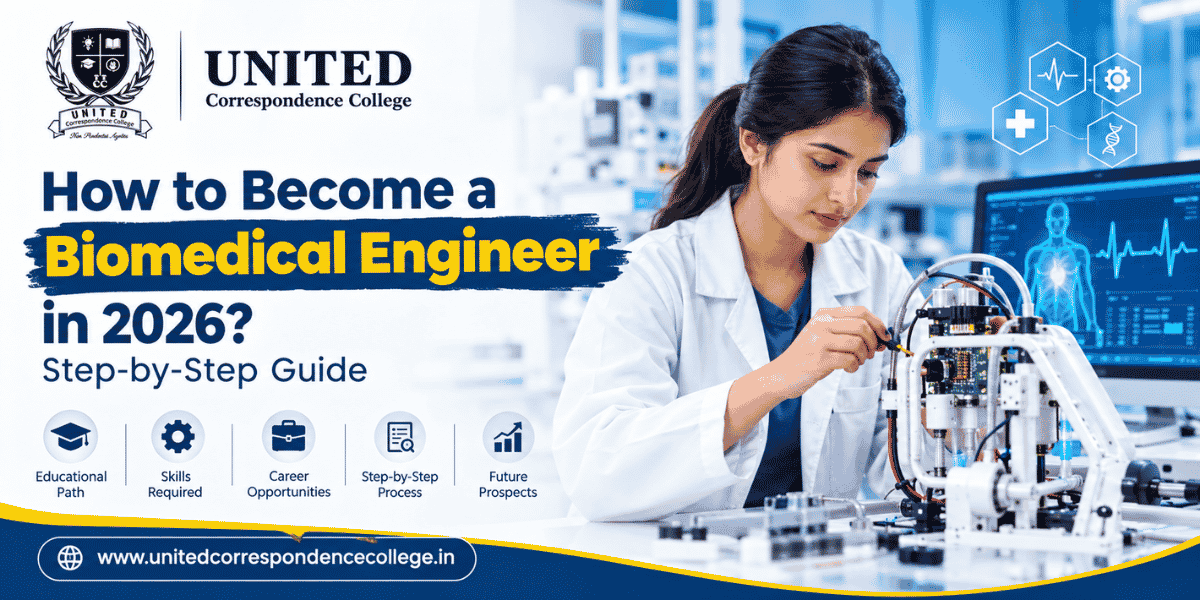
Health care is no longer the exclusive domain of medical practitioners, medicines, and hospitals but rather a combination of things like engineers developing devices, diagnostic machines and other equipment, and means to improve the existing healthcare provisions. If you are interested in science, technology, and engineering, and want to satisfy your urge to find solutions to medical problems, then studying how to Become a Biomedical Engineer will be an excellent choice.
Biomedical engineering deals with the combination of engineering with biology and medicine and two other fields, electronics and software. Thus, it is slightly different from some other form of engineering, and before going ahead and picking it up as your career option, it is essential to have a sound perspective of the work involved, the subjects that you will have to study, and the competencies and experience you will need to gain to make a successful specialist.
What Does a Biomedical Engineer Actually Do?
A biomedical engineer uses engineering principles for healthcare problems. Depending upon the nature of the work, the professional may engage in medical equipment, prosthetics, rehabilitation technology, imaging systems, sensors, software, biomaterials, or research.
For someone looking to become a biomedical engineer, it becomes essential to think beyond the word ‘engineer.’ The person has to think and innovate about how engineering principles can bring about a practical change. The practical application can take the form of a team working together to make a patient-monitoring device more efficient or think of a better product that makes life easier for accident victims or testing a medical product to ensure its efficacy or analysing the performance of certain equipment in a hospital or helping design the equipment for effective performance.
Modern-day biomedical engineers are also involved with AI, IoT, Instrumentation; the latest courses even throw in clinical training and awareness about allied healthcare fields. For example, the programme description for IIT Madras for the academic year 2021 mentions an interdisciplinary approach concerning medical devices, AI, IoT, clinical awareness, and healthcare technologies.
Why Are More Students Exploring Biomedical Engineering?
The attraction of biomedical engineering comes from its interdisciplinary nature. Students who like both science and technology do not necessarily have to choose between the two.
The field can lead towards medical devices, rehabilitation technologies, hospital technology, health-tech products, research, and biomedical data applications. Current career resources also highlight medical-device development, clinical engineering, biomedical equipment, and research as areas connected with the profession.
If your long-term aim is to become a Biomedical Engineer, start by asking yourself a simple question: do you enjoy understanding how things work and then using that knowledge to solve practical problems? If the answer is yes, this field may be worth exploring further.
Step 1: Build the Right Academic Foundation
The journey to Become a Biomedical Engineer usually starts in the science stream at school level. Physics and mathematics are particularly important for engineering-based programmes, while biology can help students understand the healthcare side of the discipline.
Requirements vary by institution. For example, one current B.Tech biomedical engineering programme specifies Physics and Mathematics as compulsory subjects along with another listed science/technology subject, while other institutions may have different subject and percentage requirements.
Students researching an Engineering correspondence college in Bangalore should therefore look beyond the course title and check the exact qualification, mode of study, recognition, practical requirements, and admission rules before applying.
Step 2: Choose the Right Degree Path
For many students, a B.E. or B.Tech in Biomedical Engineering is the direct undergraduate route. Some institutions also offer related interdisciplinary programmes, while another possible route can involve a relevant engineering or science bachelor’s degree followed by specialised postgraduate study.
When comparing Biomedical engineering courses in India, do not judge a programme only by its name. If your goal is to Become a Biomedical Engineer, the learning environment matters as much as the course title.
A typical undergraduate programme may introduce students to engineering mathematics, electronics, biomechanics, biomaterials, physiology, medical instrumentation, programming, signals, imaging, and design.
If you are searching for a B.Tech correspondence college in India, be especially careful about whether the specific engineering programme is appropriate for your intended professional path. Engineering education can involve substantial practical and laboratory components, so the delivery mode and recognition should be verified directly with the institution and relevant authorities.
Step 3: Understand Biomedical Engineering Eligibility
One of the most common search terms related to this field is Biomedical engineering eligibility. There is no fixed eligibility criterion that is common to all institutions.
Various colleges set their own eligibility criteria for admissions in their respective undergraduate courses. Hence, one must check the official website of the desired university and go through the latest admission guidelines. The information mentioned above is true for the year 2026. Therefore, there might be a change in the eligibility criterion for different universities.
In case of postgraduate courses, one must look for the discipline of the bachelor’s degree and other specific criteria set by the university. For some specialisations in M. Tech, the basic eligibility for biomedical engineering students might be a bachelor’s degree in engineering or even science.
Step 4: Learn the Subjects Behind the Technology
To be a successful biomedical engineer, you should have an interest in medicine, but also a curiosity about how technical systems are designed, tested and improved. Students who are considering studying at an M.Tech correspondence college in Karnataka may also want to think about how postgraduate study might advance their engineering and technology specialisation.
Core areas of study will likely include:
- Engineering mathematics
- Physics and electronics
- Human anatomy and physiology
- Biomechanics
- Biomaterials
- Medical instrumentation
- Biomedical signals
- Medical imaging
- Programming and data analysis
- Engineering design
While the syllabus will vary depending on the course, the basic principles remain the same: to learn enough biology to understand the healthcare problem, and enough engineering to build, test, analyse or improve the solution.
Step 5: Develop the Skills Employers Actually Use
A degree gives you a foundation, but practical skills help you turn classroom learning into useful work.
Technical Skills
Students can gradually develop:
- CAD and 3D modelling
- Electronics and circuit fundamentals
- Sensors and instrumentation
- Programming
- Data analysis
- Simulation
- Prototyping
- Documentation and testing
Healthcare and Regulatory Awareness
Biomedical products operate in a sensitive environment. Engineers may need to understand safety, testing, quality systems, documentation, clinical requirements, and applicable regulations.
Human Skills
Communication matters too. A biomedical engineer may work with doctors, researchers, technicians, software teams, product managers, or manufacturing teams. Being able to explain a technical idea clearly can be just as useful as knowing the technical details.
These areas form an important part of modern Biomedical engineering skills, especially as biomedical programmes increasingly combine engineering with digital technologies and healthcare applications.
Step 6: Get Practical Experience Before Graduation
One of the easiest ways to enrich your education is with projects.
If you are considering becoming a Biomedical Engineer, don’t wait until graduate school to get hands-on experience. Early projects can help determine if the applied aspect of the profession is a good fit for you. Students considering a Diploma in Engr correspondence college in India can also look to projects as a means of seeing how theory is applied.
You could look at:
- A wearable health monitoring concept
- A basic biomedical sensor project
- A rehabilitation device prototyping project
- A patient monitoring interface
- A biomedical data analysis project
- A 3d printed assistive device model
Internships can also give you a good insight into the profession. Depending on the organisation, you could see medical equipment, device testing, quality control, research, hospital technology or product development.
A Simple Biomedical Engineering Career Roadmap
| Stage | What to Focus On |
| School | Build a strong science and mathematics foundation |
| Undergraduate study | Learn engineering and biomedical fundamentals |
| College projects | Apply classroom concepts to practical problems |
| Internship | Understand real workplace processes |
| Final-year stage | Build a portfolio and choose a direction |
| First job | Gain industry experience and specialise |
| Higher study | Move towards advanced research or specialised roles |
This roadmap is intentionally simple. Your actual route can change depending on your qualification, institution, interests, and career goal.
Step 7: Pick a Specialisation That Matches Your Interests
Biomedical engineering is broad, so you do not have to become an expert in everything.
Medical Instrumentation
This area focuses on equipment and systems used to measure, monitor, or support healthcare processes.
Biomaterials
This involves studying and developing materials that can be used in medical applications.
Biomechanics
If you are interested in movement, forces, prosthetics, orthopaedics, or rehabilitation, biomechanics may be a useful direction.
Biomedical Imaging
This area connects engineering with technologies used to create and process medical images.
Rehabilitation Engineering
The focus is on technologies that support mobility, independence, and rehabilitation.
Biomedical Data and AI
Students interested in programming and analytics can explore healthcare data, computational modelling, AI-assisted systems, and digital health.
If you plan to Become a Biomedical Engineer with a specialised profile, choose an area where your technical interests and long-term career goals overlap. That decision can make later project and internship choices easier.
Step 8: Explore the Workplaces Before Choosing Your First Job
The work can be found in a variety of organisations.
Biomedical engineers may find work in:
- Medical device companies
- Hospitals and healthcare organisations
- Diagnostic technology companies
- Pharmaceutical and biotechnology companies
- Research institutes
- Rehabilitation technology companies
- Health-tech start-ups
- Manufacturing and service companies
The actual job titles can vary enormously from one employer to another, and different jobs will have an emphasis on design and development or equipment support or testing or quality or regulatory documentation or clinical technology or research.
That is why a good Biomedical engineering career plan should have flexibility during the first few years. And if you want to become a biomedical engineer then your first job could be as much a learning opportunity as a working career.
Common Job Roles After Biomedical Engineering
| Job Role | Typical Focus |
| Biomedical Engineer | Healthcare technology and engineering solutions |
| Clinical Engineer | Medical technology within healthcare settings |
| Medical Device Engineer | Device design, testing, and development |
| Biomedical Equipment Engineer | Equipment support and technical processes |
| R&D Engineer | Research, prototypes, and innovation |
| Rehabilitation Engineer | Assistive and rehabilitation technologies |
| Biomedical Data Analyst | Biomedical and healthcare data |
These titles are examples rather than a fixed list. Employers may combine responsibilities or use different names for similar roles.
What About Salary?
Salary should not be the sole motivator to pursue a career in the field.
Biomedical engineering salaries in the United States depend on many factors such as experience, employer, location, qualifications, technical specialisation, industry, and the duties and responsibilities of the job. Thus, current job market sources that indicate the average salary in the field cannot be relied upon as a definitive answer. One should understand that an online source or a job market website can only provide an approximate range of salaries depending upon the aforementioned factors.
Therefore, a student considering the biomedical engineering field should rather focus on obtaining relevant skills that make them eligible for a wide range of applications and salaries depending on the individual’s abilities in the field. This way, they would have a better understanding of what they are capable of and where they could fit according to their skills.
What If You Are Exploring Other Education Routes?
Students may compare biomedical engineering to other more general flexible education options
A student looking for a Diploma in Engr correspondence college in India may be considering engineering foundation or lateral entry, but they would need to check with the institution about their eligibility and acceptance of a diploma for a particular course of study. Likewise, a Science distance degree in Bangalore could be attractive to any student looking to pursue a science-based qualification. Nonetheless, a general science degree does not equate to a specific biomedical engineering degree, so the candidate’s preferred field of work defines the qualification that they may need.
The same applies to a B.Sc correspondence college in Karnataka and the possibility of pursuing some form of engineering, which is likely to have different requirements and emphases to a science degree. Meanwhile, students considering a M.Tech correspondence college in Karnataka should compare the precise details of the course, such as eligibility, accreditation, practicals, and general compatibility with their intended specialization.
How to Make Your Profile Stand Out in 2026?
The students who take time to build evidence of what they can do can create a stronger professional profile.
If you want to Become a Biomedical Engineer, consider building a simple portfolio that includes:
- Two or three relevant academic projects.
- A short explanation of the problem each project addresses.
- Tools or technologies you used.
- Internship experience, if available.
- Certifications that genuinely support your chosen area.
- A clear résumé showing technical and project skills.
- A professional profile that explains your career direction.
You do not need an impressive collection of unrelated certificates. A smaller number of meaningful projects can make your learning easier to understand.
Students who want to Become a Biomedical Engineer should use this stage to explore whether design, devices, data, or research interests them most.
To Become a Biomedical Engineer, it is helpful to treat every academic project as a chance to practise professional problem-solving.
Anyone hoping to Become a Biomedical Engineer should learn to connect a technical feature with the healthcare need it is meant to address.
To Become a Biomedical Engineer in a competitive field, practical evidence of learning can be valuable alongside formal qualifications.
If you want to Become a Biomedical Engineer, choose projects that allow you to explain both the technical method and the healthcare purpose.
The decision to Become a Biomedical Engineer becomes clearer when you compare your interests with the day-to-day work of different roles.
Students preparing to Become a Biomedical Engineer can also follow research papers, industry news, and university projects to understand where the field is moving.
To Become a Biomedical Engineer, you do not need to master every emerging technology at once; focus first on strong fundamentals.
Anyone preparing to Become a Biomedical Engineer should become comfortable asking questions when a technical problem has a clinical or human impact.
If your plan is to Become a Biomedical Engineer, internships can help you discover which workplace environment feels most suitable.
Those who want to Become a Biomedical Engineer should keep their résumé focused on relevant projects, tools, internships, and measurable learning.
To Become a Biomedical Engineer, start building professional connections with teachers, project mentors, researchers, and industry professionals.
A student can Become a Biomedical Engineer through a thoughtful combination of education, practical learning, and continuous skill development.
To Become a Biomedical Engineer, remember that healthcare technology values accuracy, safety, documentation, and responsible problem-solving.
If you hope to Become a Biomedical Engineer, learning how to communicate with non-engineers will make multidisciplinary work easier.
To Become a Biomedical Engineer, compare your preferred specialisation with the skills requested in real job descriptions.
Students aiming to Become a Biomedical Engineer can use final-year projects to demonstrate the type of work they want to pursue after graduation.
The path to Become a Biomedical Engineer can include changes in direction as your interests become clearer through study and experience.
Ultimately, to Become a Biomedical Engineer is to build a career around applying engineering thinking to meaningful healthcare challenges.
Is Biomedical Engineering the Right Career for You?
There is no simple answer as to which path to follow as a career choice depends on what one likes and wants to achieve in life.
Biomedical engineering could be an excellent choice for those interested in diverse fields, ranging from science to engineering, electronics, research, and healthcare. However, it could also be overwhelming due to the need to constantly acquire new knowledge and the need to have interdisciplinary skills.
Before deciding to become a biomedical engineer, one needs to evaluate what kind of work one would like to do. This introspection will help develop the interest areas during the course, and one can explore specific specialisations by choosing suitable projects. Does one see oneself doing design work or analysing data or working with sensors and electronic hardware or studying new technologies? Or does one want to focus on understanding the relationship between biological systems and emerging technologies? The answers will define the specialisation one might be interested in pursuing.
A Practical 2026 Action Plan
If your aim is to Become a Biomedical Engineer, then below is a list of the steps to guide you through the process:
Step 1: Strengthen science and maths concepts
Step 2: Start searching for the best biomedical engineering degrees
Step 3: Compare the best biomedical engineering programs based on curriculums, hands-on experience, projects, and internships.
Step 4: Study engineering, programming, and healthcare-related expertise
Step 5: Try to engage in some practical projects instead of theoretical ones
Step 6: Enroll in internships or industry training
Step 7: Think of the niche or field you want to specialize in: medical devices, imaging technologies, biomechanics, or bio-data analysis
Step 8: Create a portfolio and resume
Step 9: Get an entry-level job or pursue further studies
Using the steps will make your task more comfortable since you will not have to think of everything at once.
Why Does the Right Education Choice Matters?
The qualification which one selects determines everything else that follows. Before making a choice, it is important to compare and contrast the curriculum, recognition, teaching method, practical training, academic support, project opportunities, and progression possibilities.
UCC can be considered by those students who want to explore educational opportunities at various levels and understand how different qualifications fit together within the context of a career. The program can also be accessed by learners considering the option of studying in a more flexible manner.
Nevertheless, when selecting a particular course, students should be led by the requirements of the career that they intend to pursue and not be tempted to make their choice solely on the allure of the word itself.
Conclusion
Biomedical engineering presents an opportunity to combine engineering, science-related, healthcare and technological fields together in order to solve real-life problems. Be it medical devices, rehabilitation technologies, biomedical data or advanced healthcare systems – there are several areas to consider for a student with diverging interests. If you wish to become a Biomedical Engineer, it is essential to choose the right educational pathway, build a solid technical foundation, accumulate experience and expand your knowledge to eventually specialize in a particular field.
While the journey to a degree in biomedical engineering may be long, internships, projects, technical and communication skills, as well as continuous learning, can help accumulate experience and gain an understanding of the industry and its needs. With the right career planning and the educational background that supports it, you can develop a strategy for progressing in the field of biomedical engineering.
FAQs
1. How can I Become a Biomedical Engineer after Class 12?
One can become a biomedical engineer by passing 12 th exam with the necessary subjects, taking an undergraduate course related to engineering, gaining expertise in related fields, completing projects or internships, then acquiring a position or higher education in the field. One must make sure of the eligibility criteria of different institutions for application.
2. Which subjects are important for biomedical engineering?
Physics and mathematics are integral to most engineering disciplines, while biology, chemistry, electronics, programming, and engineering subjects tend to come into play depending on the curriculum and specialisation.
3. What degree is required to become a Biomedical Engineer?
A B.E. or B.Tech in Biomedical Engineering is one direct route. Other relevant engineering or science backgrounds followed by specialised postgraduate study may also lead into parts of the field, depending on the employer and role.
4. What skills biomedical engineer should learn?
Engineering Design, Electronics, Programming, Data Analysis, Medical Instrumentation, Problem Solving, Technical Writing, Teamwork, Communication, etc.
5. What are the career options in biomedical engineering?
Biomedical engineering jobs can be found in medical-device companies, hospitals, research organisations, health-tech businesses, manufacturing, rehabilitation technology, and related healthcare technology sectors.
Ready to take the first step toward your career goals? Explore the right educational opportunities, build relevant skills, and choose a learning pathway that supports your future plans. United Correspondence College (UCC) can help you explore flexible higher-education options while you work towards your academic and professional goals.