
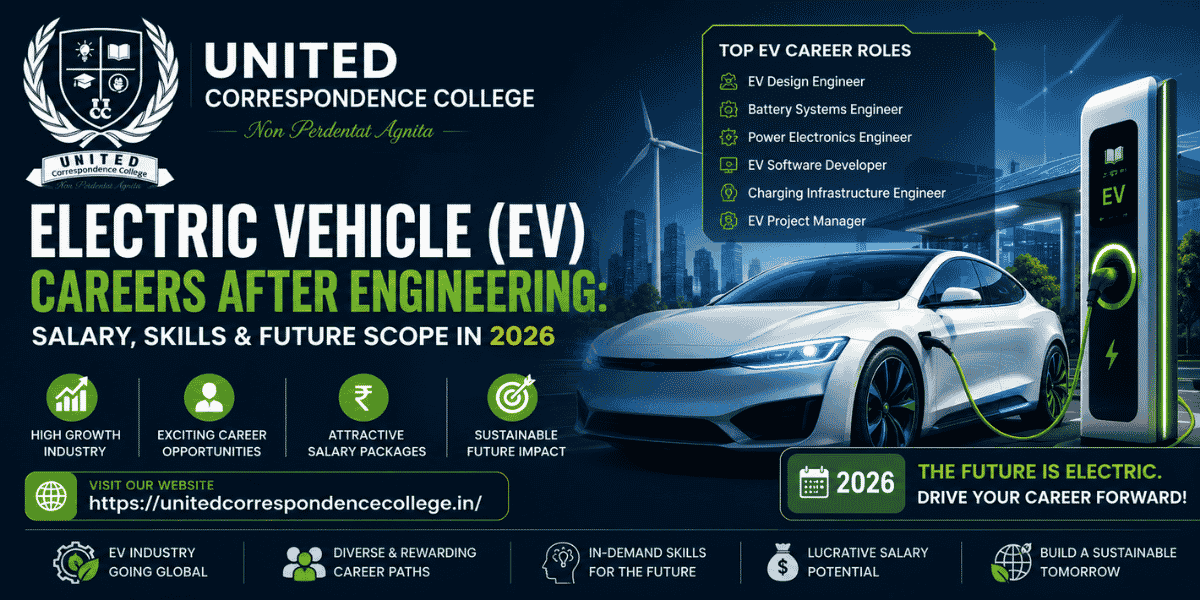
Electric Vehicle Careers are becoming one of the most exciting opportunities for engineering graduates in 2026. With governments, automobile manufacturers, and technology companies investing heavily in sustainable transportation, the demand for skilled EV professionals is growing rapidly. From battery development and charging infrastructure to software systems and autonomous mobility, Electric Vehicle Careers offer diverse pathways for engineers seeking future-ready jobs.
India’s EV market is expanding at an unprecedented pace due to supportive policies, environmental awareness, and technological innovation. As a result, Electric Vehicle Careers are creating thousands of employment opportunities across automotive, manufacturing, electronics, and energy sectors. Whether you are a diploma holder, B.Tech graduate, or engineering professional looking to upgrade your qualifications, now is an excellent time to explore this high-growth industry.
Why Electric Vehicle Careers Are Growing Rapidly?
The transportation industry is undergoing a major transformation. Traditional fuel-powered vehicles are gradually being replaced by electric vehicles that are cleaner, smarter, and more efficient.
Several factors are driving the growth of Electric Vehicle Careers:
- Government EV adoption initiatives
- Expansion of charging infrastructure
- Increased investment in battery technology
- Rising fuel costs
- Environmental sustainability goals
- Growth of smart mobility solutions
As companies continue investing in EV innovation, Electric Vehicle Careers are expected to remain among the most sought-after engineering professions for years to come.
Understanding the EV Industry Ecosystem
The EV industry extends beyond vehicle manufacturing. It includes multiple sectors working together to create a complete electric mobility ecosystem.
Major Components of the EV Industry
- Electric Vehicle Manufacturing
- Battery Technology
- Charging Infrastructure
- Power Electronics
- Embedded Systems
- Autonomous Driving Technology
- Vehicle Software Development
- Renewable Energy Integration
This wide ecosystem creates numerous Electric Vehicle Careers for engineering graduates with different specializations.
Why Engineering Graduates Are Choosing EV Careers?
| Factor | Career Benefit |
| Rapid Industry Growth | More job opportunities |
| Advanced Technology | Exposure to AI and automation |
| High Demand | Strong hiring potential |
| Attractive Salaries | Competitive compensation |
| Global Opportunities | International career growth |
| Sustainability Focus | Meaningful long-term impact |
Top Electric Vehicle Careers for Engineering Graduates
1. EV Design Engineer
EV Design Engineers work on developing vehicle structures, components, and performance systems.
Responsibilities:
- Vehicle architecture design
- Thermal management systems
- Product development
- Performance optimization
This role remains one of the most rewarding Electric Vehicle Careers for mechanical engineers.
2. Battery Technology Engineer
Battery systems are the heart of electric vehicles.
Responsibilities:
- Battery design
- Performance testing
- Battery safety analysis
- Energy storage optimization
Battery engineers are critical to the future success of Electric Vehicle Careers.
3. Power Electronics Engineer
Power electronics control energy flow within electric vehicles.
Responsibilities:
- Motor controllers
- Inverters
- Converters
- Charging systems
Demand for this specialization continues growing throughout the EV industry.
4. EV Software Engineer
Modern electric vehicles rely heavily on software.
Responsibilities:
- Vehicle software development
- Embedded systems programming
- Vehicle diagnostics
- Connectivity solutions
Software-focused Electric Vehicle Careers are attracting Computer Science and Electronics graduates.
5. Charging Infrastructure Engineer
The expansion of charging networks is creating significant opportunities.
Responsibilities:
- Charging station deployment
- Power management
- Grid integration
- Infrastructure maintenance
This is one of the fastest-growing segments within Electric Vehicle Careers.
6. Battery Management System (BMS) Engineer
BMS engineers monitor battery health, safety, and efficiency.
Key Skills:
- Embedded systems
- Electronics
- Battery analytics
- Software integration
BMS expertise is highly valued in today’s EV market.
7. EV Research and Development Engineer
Research professionals focus on innovation and next-generation EV technologies.
Responsibilities:
- Product innovation
- Technology testing
- Prototype development
- Performance enhancement
These advanced Electric Vehicle Careers often offer strong long-term growth potential.
Essential Skills Required for Electric Vehicle Careers
Success in Electric Vehicle Careers requires both technical and professional skills.
Technical Skills
- Battery Technology
- Electric Motors
- Embedded Systems
- CAD Design
- Power Electronics
- PLC Programming
- Artificial Intelligence
- Machine Learning
- IoT Technologies
Soft Skills
- Problem-solving
- Analytical thinking
- Communication
- Team collaboration
- Innovation mindset
Engineering graduates who continuously upgrade their skills remain highly competitive in the EV industry.
Most In-Demand EV Skills in 2026
| Skill | Industry Importance |
| Battery Technology | Core EV functionality |
| Power Electronics | Vehicle efficiency |
| Embedded Systems | Smart controls |
| AI Integration | Autonomous mobility |
| IoT Connectivity | Smart vehicle communication |
| Data Analytics | Performance optimization |
Salary of EV Professionals in India in 2026
One reason Electric Vehicle Careers attract many engineering graduates is the excellent salary potential.
| Experience Level | Average Salary |
| Fresher | ₹4–8 LPA |
| 2–5 Years | ₹8–15 LPA |
| 5–10 Years | ₹15–30 LPA |
| Senior Experts | ₹30+ LPA |
Professionals with expertise in battery technology, AI integration, and automation typically earn higher salaries.
Best Engineering Streams for EV Careers
Mechanical Engineering
Ideal for vehicle design, manufacturing, and thermal systems.
Electrical Engineering
Focuses on batteries, charging systems, and power electronics.
Electronics Engineering
Supports embedded systems and vehicle controls.
Automobile Engineering
Specializes in EV architecture and performance.
Computer Science Engineering
Works on software systems, AI integration, and autonomous driving technologies.
These disciplines provide strong foundations for successful Electric Vehicle Careers.
How Distance Education Can Support Engineering Career Growth?
Modern learners often pursue flexible education options while working or managing personal responsibilities.
Students enrolled in Engineering distance education programs can continue enhancing their technical qualifications while gaining practical industry experience.
Many aspiring professionals choose an Engineering correspondence college in Bangalore to access flexible learning opportunities without disrupting their careers.
Similarly, students seeking a B.Tech correspondence college in India can strengthen their engineering knowledge while preparing for future-focused industries such as electric mobility.
Advanced learners often pursue qualifications through an M.Tech correspondence college in Karnataka to specialize in emerging technologies relevant to EV development.
Those beginning their technical education journey may consider a Diploma in Engr correspondence college in India to build foundational engineering skills.
Flexible learning opportunities available through distance education in bangalore help students stay competitive in rapidly evolving industries.
Future Scope of Electric Vehicle Careers
The future of Electric Vehicle Careers is extremely promising.
Key Growth Areas
Smart Mobility
Connected and intelligent transportation systems are expanding rapidly.
Autonomous Vehicles
AI-powered vehicle technologies continue advancing.
Battery Innovation
Next-generation battery solutions remain a major focus area.
Renewable Energy Integration
Electric vehicles increasingly connect with clean energy ecosystems.
Smart Manufacturing
Automation and robotics are transforming vehicle production facilities.
These trends ensure strong demand for EV professionals well beyond 2026.
Why UCC Can Help You Prepare for Future Engineering Careers?
Educational flexibility plays a crucial role in career development.
UCC helps learners explore educational pathways that align with modern industry requirements.
Whether you are pursuing engineering qualifications, upgrading technical skills, or preparing for emerging technology sectors, UCC supports career-focused learning opportunities.
Thousands of students trust UCC for guidance, flexibility, and educational support that helps them remain competitive in future-ready industries.
Conclusion
The rapid growth of electric mobility is creating unprecedented opportunities for engineering professionals. From battery technology and software development to charging infrastructure and autonomous systems, Electric Vehicle Careers offer diverse pathways for long-term success.
With strong industry demand, attractive salaries, and exciting technological advancements, engineering graduates have excellent opportunities to build rewarding careers in the EV sector. By developing relevant technical skills, gaining certifications, and staying updated with industry trends, aspiring professionals can position themselves for success in one of the most transformative industries of the future.
As electric mobility continues to expand across India and the world, Electric Vehicle Careers will remain among the most promising engineering career choices in 2026 and beyond.
Looking to advance your engineering qualifications and prepare for future-focused industries like electric vehicles, automation, and smart mobility?
Connect with United Correspondence College today and explore flexible learning opportunities that can help you develop the skills and knowledge needed for long-term career success.
FAQs
1. Is Electric Vehicle Engineering a good career in 2026?
Yes, Electric Vehicle Engineering is considered one of the most promising engineering career paths in 2026. With governments worldwide promoting sustainable transportation and major automobile companies investing heavily in EV technology, demand for skilled professionals continues to rise. Electric Vehicle Careers offer opportunities in battery technology, vehicle design, power electronics, software development, and charging infrastructure. The industry provides competitive salaries, strong job security, and global career prospects. Students pursuing engineering qualifications can benefit from this rapidly growing sector by developing technical expertise and industry-relevant skills. As electric mobility expands, EV engineering is expected to remain a future-proof and rewarding profession.
2. Which engineering branch is best for EV careers?
Several engineering disciplines can lead to successful EV careers, depending on individual interests and specialization. Mechanical Engineering is ideal for vehicle design and manufacturing, while Electrical Engineering focuses on batteries, motors, and charging systems. Electronics Engineering supports embedded systems and control technologies, while Computer Science contributes to AI, software, and autonomous driving solutions. Students studying through an Engineering correspondence college in Bangalore can build foundational knowledge in these areas while pursuing flexible education options. Since EVs combine multiple technologies, interdisciplinary engineers often enjoy excellent career opportunities in the rapidly expanding electric mobility industry.
3. What skills are required for Electric Vehicle jobs?
Electric Vehicle professionals require a combination of technical and practical skills to succeed in this evolving industry. Key competencies include battery technology, power electronics, embedded systems, electric motor design, CAD software, automation, and data analytics. Knowledge of Artificial Intelligence, IoT, and smart mobility solutions can further improve career prospects. Students pursuing Engineering distance education programs can develop these skills through certifications, online learning, and practical projects. Employers also value problem-solving abilities, teamwork, innovation, and communication skills. Continuous learning is essential because EV technology evolves rapidly, creating new opportunities for engineers who stay updated with industry advancements.
4. What is the average salary of an EV Engineer in India?
The salary of an EV Engineer in India depends on experience, technical expertise, and specialization. Freshers typically earn between ₹4–8 LPA, while professionals with several years of experience can earn ₹15–30 LPA or more. Engineers specializing in battery management systems, autonomous driving technologies, AI integration, and power electronics often command higher salaries. Students graduating from a B.Tech correspondence college in India can improve their earning potential by gaining hands-on experience, industry certifications, and specialized EV skills. As the EV sector expands across manufacturing, mobility, and energy industries, salary packages are expected to become even more attractive in the coming years.
5. Can diploma holders work in the EV industry?
Yes, diploma holders can build successful careers in the Electric Vehicle industry. Many organizations hire diploma graduates for technical, maintenance, assembly, quality control, testing, and manufacturing roles. Students studying through a Diploma in Engr correspondence college in India can develop the foundational engineering knowledge required to enter the EV workforce. Additional certifications in EV technology, battery systems, automation, and industrial maintenance can further enhance employability. As EV production facilities and charging infrastructure projects continue expanding, diploma graduates have increasing opportunities to secure stable and rewarding positions within this fast-growing industry.
6. Is battery technology a good career option?
Absolutely. Battery technology is one of the most critical components of the Electric Vehicle ecosystem and remains a high-growth specialization. Engineers working in battery research, design, testing, safety analysis, and energy storage solutions are highly sought after by EV manufacturers and technology companies. Students pursuing advanced qualifications through an M.Tech correspondence college in Karnataka can specialize in energy systems, electronics, or related fields that support battery innovation. With continuous advancements in lithium-ion batteries, solid-state batteries, and energy management systems, battery technology offers excellent salary potential, career growth, and long-term industry relevance.
7. Can distance education students build EV careers?
Yes, students studying through distance learning programs can successfully build careers in the EV industry. Modern employers focus on technical knowledge, practical skills, certifications, and project experience rather than learning mode alone. Learners enrolled in distance education in bangalore programs can complement their academic studies with EV-related certifications, online training, internships, and hands-on projects. Developing expertise in battery systems, embedded technologies, automation, and electric mobility solutions can significantly improve career prospects. With the right skills and continuous learning, distance education students can compete effectively for various roles within the rapidly expanding Electric Vehicle sector.
8. What is the future scope of Electric Vehicle Careers?
The future scope of Electric Vehicle Careers is exceptionally strong due to increasing investments in sustainable transportation, battery innovation, autonomous mobility, and smart infrastructure. Governments and private organizations are actively supporting EV adoption to reduce emissions and improve energy efficiency. This growth is creating demand for engineers specializing in vehicle design, software systems, charging infrastructure, battery management, and renewable energy integration. Over the next decade, electric mobility is expected to transform transportation worldwide, creating thousands of new job opportunities. Professionals who develop EV-specific skills today will be well-positioned to benefit from one of the fastest-growing industries globally.