
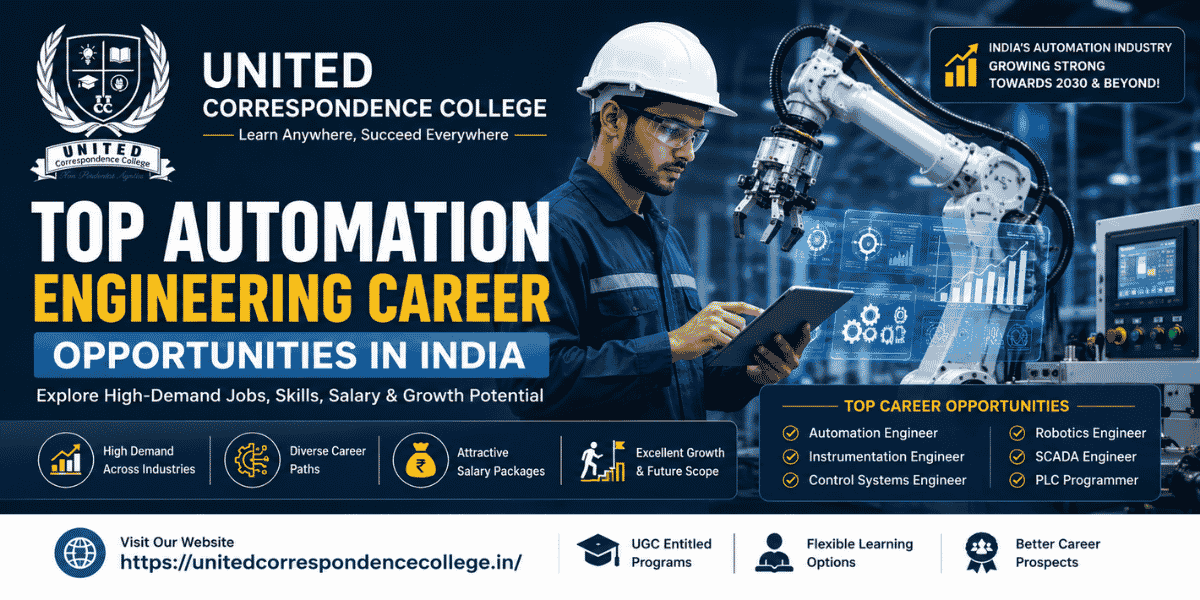
Automation Engineering Career opportunities are becoming one of the most attractive options for engineering students and working professionals in 2026. As industries rapidly adopt smart manufacturing, robotics, Industrial Internet of Things (IIoT), Artificial Intelligence (AI), and digital automation technologies, the demand for skilled automation professionals is growing faster than ever. Companies across manufacturing, automotive, healthcare, logistics, energy, and infrastructure sectors are actively seeking automation experts who can design, manage, and optimize automated systems.
The rise of Industry 4.0 has created thousands of new job openings, making a Automation Engineering Career a promising choice for those looking for stability, high salaries, and long-term growth. Whether you are pursuing an engineering degree or looking to upgrade your skills through flexible learning options, automation engineering offers endless possibilities. This guide explores the best career opportunities, skills, salaries, and future prospects in this rapidly evolving field.
Why Automation Engineering Is Booming in India?
India is undergoing a major technological transformation. Businesses are investing heavily in automation to improve productivity, reduce costs, and increase efficiency. This shift has made a Automation Engineering Career one of the fastest-growing career paths in the engineering sector.
Some major factors driving automation growth include:
- Industry 4.0 adoption
- Smart factories
- Robotics integration
- Artificial Intelligence
- Industrial IoT
- Digital transformation initiatives
- Government manufacturing programs
As industries continue embracing automation, professionals with specialized knowledge are becoming increasingly valuable.
Key Drivers Creating Automation Jobs in 2026
| Growth Driver | Career Impact |
| Industry 4.0 | Increased demand for automation experts |
| Robotics Integration | More engineering opportunities |
| Artificial Intelligence | Creation of intelligent automation roles |
| Smart Manufacturing | Expansion of industrial automation jobs |
| Industrial IoT | New technology-focused positions |
| Digital Transformation | High demand across industries |
What Does an Automation Engineer Do?
A professional pursuing a Automation Engineering Career is responsible for designing, implementing, monitoring, and maintaining automated systems. Their primary goal is to improve efficiency and reduce manual intervention in industrial processes.
Typical responsibilities include:
- PLC programming
- SCADA system management
- Industrial automation design
- Robotics integration
- Process optimization
- Troubleshooting automation systems
- Data monitoring and analytics
Automation engineers work closely with production teams, software developers, and management professionals to ensure seamless operations.
Automation Engineering Career Opportunities in India for 2026
1. Automation Engineer
This is the most common and sought-after role in the automation sector. Automation engineers develop systems that automate manufacturing and business operations.
Responsibilities:
- System design
- Automation programming
- Equipment optimization
- Performance monitoring
A Automation Engineering Career often begins with this position.
2. PLC Programmer
PLC programmers create and maintain programmable logic controller systems used in manufacturing facilities.
Key Skills:
- PLC programming
- Industrial controls
- Automation troubleshooting
The demand for PLC programmers continues to rise as factories modernize operations.
3. SCADA Engineer
SCADA engineers manage supervisory control systems that monitor industrial processes.
Responsibilities:
- System monitoring
- Data acquisition
- Process control
This role plays a crucial part in large-scale automation projects.
4. Robotics Engineer
Robotics engineers design and implement robotic systems used in manufacturing and logistics.
Robotics has become an important part of a Automation Engineering Career, especially with increasing AI integration.
5. Control Systems Engineer
Control systems engineers develop technologies that regulate industrial equipment and machinery.
Industries Hiring:
- Manufacturing
- Oil & Gas
- Automotive
- Aerospace
These professionals ensure operational stability and efficiency.
6. Industrial IoT Engineer
Industrial IoT engineers connect machines and devices through intelligent networks.
Responsibilities:
- Smart sensor integration
- Predictive maintenance systems
- Data-driven automation
IIoT continues to create exciting opportunities for automation professionals.
7. Automation Project Engineer
These engineers oversee automation implementation projects from planning to execution.
Skills Required:
- Project management
- Automation technologies
- Team leadership
A Automation Engineering Career often advances into project management roles.
8. RPA Developer
Robotic Process Automation (RPA) developers automate repetitive business processes through software solutions.
Popular Tools:
- UiPath
- Automation Anywhere
- Blue Prism
Demand for RPA professionals continues to increase across industries.
Essential Skills Required for Automation Engineering
To build a successful Automation Engineering Career, students should focus on developing both technical and soft skills.
Technical Skills
- PLC Programming
- SCADA Systems
- Robotics
- Artificial Intelligence
- Machine Learning Basics
- Industrial Networking
- Industrial IoT
- Automation Software
Soft Skills
- Communication
- Analytical Thinking
- Problem Solving
- Team Collaboration
- Project Management
Employers value professionals who combine technical expertise with strong interpersonal skills.
Educational Pathways for Automation Careers
Students can enter automation engineering through multiple academic routes.
| Qualification | Career Opportunities |
| Diploma in Engineering | Technician, PLC Support Engineer |
| B.Tech Engineering | Automation Engineer, Robotics Engineer |
| M.Tech Engineering | Senior Automation Specialist |
| Automation Certifications | Specialized Industry Roles |
| Industrial Training Programs | Practical Skill Development |
Many students now choose Engineering distance education programs to continue learning while gaining industry experience.
Similarly, institutions offering Engineering correspondence college in Bangalore programs help students build engineering qualifications with greater flexibility.
Students pursuing a B.Tech correspondence college in India pathway can also explore automation-related careers after graduation.
For advanced specialization, many professionals choose M.Tech correspondence college in Karnataka programs to enhance technical expertise.
Additionally, learners seeking foundational engineering qualifications often consider a Diploma in Engr correspondence college in India to begin their technical careers.
Industries Hiring Automation Engineers
A Automation Engineering Career can lead to opportunities across various sectors.
Manufacturing
Factories increasingly rely on automated production lines.
Automotive
Automation powers vehicle manufacturing and assembly operations.
Aerospace
Precision automation improves production quality and safety.
Healthcare
Automated medical devices and smart systems create new opportunities.
Logistics
Warehouse automation and robotics continue expanding rapidly.
Energy Sector
Power generation facilities use sophisticated automation systems.
Food Processing
Automation improves production speed and quality control.
The broad applicability of automation ensures long-term job security.
Salary Expectations in Automation Engineering
One reason many students pursue a Automation Engineering Career is the attractive salary potential.
Entry-Level
₹4–8 LPA
Mid-Level
₹8–15 LPA
Senior-Level
₹15–30+ LPA
Specialized Experts
₹30 LPA and above
Salaries vary based on experience, certifications, technical expertise, and industry sector.
Future Scope of Automation Engineering in India
The future of automation engineering looks exceptionally promising.
Emerging trends include:
- AI-powered automation
- Autonomous robots
- Smart manufacturing
- Predictive maintenance
- Industrial IoT
- Digital twins
- Cloud automation systems
These innovations will continue creating new opportunities for professionals pursuing a Automation Engineering Career.
How Distance Learning Supports Automation Careers?
Many students and working professionals prefer flexible learning options to enhance their qualifications.
Programs offered through distance education in bangalore allow learners to balance education with professional responsibilities.
Students searching for a distance degree college near me often discover flexible engineering programs that align with their career goals.
Institutions offering correspondence degree colleges in bangalore support learners seeking recognized engineering qualifications without attending regular classes.
Flexible education pathways make it easier for aspiring automation professionals to gain qualifications while building industry experience.
Why Choose UCC for Career Guidance?
Choosing the right educational pathway is essential for building a successful Automation Engineering Career.
UCC helps students identify suitable engineering programs, explore flexible learning opportunities, and make informed career decisions.
Whether you are looking for admission guidance, course selection assistance, or career counseling, United Correspondence College provides valuable support throughout your educational journey.
Thousands of learners trust UCC for professional guidance and educational solutions.
Conclusion
The demand for automation professionals is expected to reach new heights in 2026 as industries continue embracing smart technologies and digital transformation. A Automation Engineering Career offers excellent job security, competitive salaries, global opportunities, and continuous professional growth.
From automation engineering and robotics to Industrial IoT and AI-driven systems, the career possibilities are vast. Students pursuing engineering qualifications through flexible learning options can successfully enter this growing field and build rewarding careers in the future.
Ready to build a successful career in one of India’s fastest-growing technology sectors?
Contact UCC today to explore engineering programs, flexible learning options, and career guidance that can help you achieve your automation engineering goals. Take the first step toward a brighter future with the right educational support and industry-focused guidance.
FAQs
1. Is Automation Engineering a good career in India in 2026?
Automation engineering is an excellent career choice in India in 2026 due to rapid industrial transformation and digital adoption. Industries are shifting toward smart manufacturing systems that use robotics, AI, and connected machines to improve efficiency and reduce costs. This shift is creating strong demand for skilled automation professionals across manufacturing, automotive, energy, and IT sectors. The field offers long-term job stability, high growth potential, and global career opportunities. As more companies invest in modern production technologies, automation engineers will continue to play a key role in industrial development.
2. What qualifications are required to become an Automation Engineer?
To become an automation engineer in India, candidates usually need a diploma or a B.Tech degree in electrical, electronics, mechanical, instrumentation, or related engineering fields. Some students also pursue M.Tech or specialized certification programs focused on automation technologies. Essential skills include PLC programming, SCADA systems, robotics, sensors, and Industrial IoT applications. Practical training, internships, and project-based learning are very important for gaining real-world experience. Employers prefer candidates who combine theoretical understanding with strong hands-on technical abilities and familiarity with industrial tools and systems.
3. What is the average salary of an Automation Engineer in India?
The salary of an automation engineer in India depends on experience, skills, and industry type. Freshers typically earn between ₹4–8 LPA, while professionals with a few years of experience can earn ₹8–15 LPA. Senior engineers or specialists in robotics, Industrial IoT, or advanced control systems can earn ₹15–30 LPA or more. Industries such as oil and gas, automotive, and large-scale manufacturing usually offer higher compensation. Additional certifications and expertise in advanced automation tools can significantly improve career growth and salary prospects over time.
4. Which industries hire Automation Engineers?
Automation engineers are hired across a wide range of industries in India and globally. Major sectors include manufacturing, automotive, aerospace, healthcare, energy, oil and gas, food processing, and logistics. These industries rely on automation to improve production efficiency, ensure quality control, and reduce manual labor costs. With the increasing adoption of robotics and smart systems, even traditional industries are implementing automation solutions. This widespread usage creates diverse and stable job opportunities for engineers with technical knowledge and practical experience in industrial automation technologies.
5. Is Automation Engineering future-proof?
Yes, automation engineering is highly future-proof because industries worldwide are rapidly moving toward digitalization and intelligent systems. Technologies like artificial intelligence, robotics, machine learning, and Industrial IoT are transforming how businesses operate. Companies are increasingly adopting automation to improve productivity, accuracy, and efficiency while reducing costs. This ensures continuous demand for skilled automation engineers in the long term. Professionals who keep upgrading their skills with emerging technologies will enjoy strong job security, career growth, and opportunities across global industries in the future.