
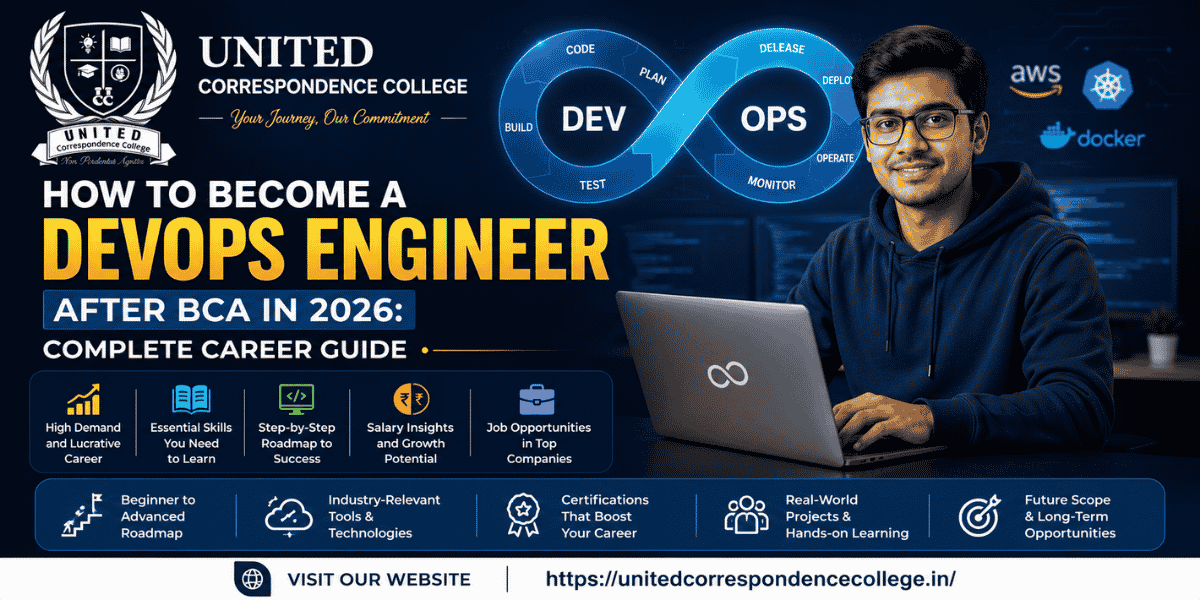
Become a DevOps Engineer After BCA is a career goal that many IT students are pursuing in 2026. The rapid growth of cloud computing, automation, artificial intelligence, and digital transformation has created a massive demand for DevOps professionals across industries. Organizations today require experts who can streamline software development, automate workflows, and manage cloud infrastructure efficiently.
If your goal is to Become a DevOps Engineer After BCA, you are entering one of the most rewarding and future-ready fields in the IT sector. From startups to multinational corporations, businesses are actively hiring DevOps professionals who can improve productivity, enhance software delivery speed, and ensure system reliability. This complete guide explains the skills, certifications, salaries, career opportunities, and future scope available for students who want to Become a DevOps Engineer After BCA and build a successful career in 2026.
Why DevOps Is One of the Hottest Careers in 2026?
Technology is evolving rapidly, and companies are under constant pressure to release software faster while maintaining quality and security. This challenge has increased the importance of DevOps practices worldwide.
Key reasons behind DevOps growth include:
- Cloud Computing Adoption
- Digital Transformation
- AI Integration
- Continuous Deployment
- Infrastructure Automation
- Cybersecurity Requirements
- Multi-Cloud Environments
These trends have significantly increased opportunities for professionals who want to Become a DevOps Engineer After BCA.
What Is DevOps?
DevOps combines software development (Dev) and IT operations (Ops) to improve collaboration, automation, and software delivery efficiency.
A DevOps Engineer works on:
- Cloud Infrastructure
- Application Deployment
- Automation Scripts
- Continuous Integration
- Continuous Deployment
- Monitoring Systems
- Security Implementation
Professionals who Become a DevOps Engineer After BCA help organizations deliver software faster and more reliably.
Why BCA Graduates Are Perfect for DevOps Careers?
Students pursuing BCA distance education programs already study several concepts that form the foundation of DevOps.
These include:
- Programming Languages
- Operating Systems
- Computer Networks
- Database Management
- Software Development
These subjects provide a strong technical base for individuals planning to Become a DevOps Engineer After BCA.
Additionally, DevOps values practical skills and certifications, making it possible for motivated BCA graduates to quickly enter the field.
Why Companies Are Hiring DevOps Engineers?
| Industry Trend | Impact on DevOps Careers |
| Cloud Computing Growth | Increased demand for cloud engineers |
| Automation Adoption | More DevOps implementation |
| AI-Based Applications | Need for scalable infrastructure |
| Remote Operations | Increased system management roles |
| Digital Transformation | Continuous demand for DevOps talent |
| Cybersecurity Requirements | Rise of DevSecOps opportunities |
Step-by-Step Roadmap to Become a DevOps Engineer After BCA
Step 1: Learn Programming Fundamentals
Programming is essential for automation and infrastructure management.
Recommended Languages:
- Python
- Shell Scripting
- Java
- JavaScript
Python is particularly useful because it supports automation, cloud management, and DevOps workflows.
Step 2: Master Linux Administration
Linux powers most cloud servers and enterprise infrastructure.
Important Topics:
- Linux Commands
- File Management
- User Permissions
- Process Management
- Server Administration
Linux expertise is one of the first skills needed to Become a DevOps Engineer After BCA.
Step 3: Understand Networking Concepts
Every DevOps professional should understand networking fundamentals.
Key Areas:
- TCP/IP
- DNS
- HTTP/HTTPS
- VPNs
- Firewalls
- Load Balancers
Strong networking knowledge helps troubleshoot cloud and server-related issues effectively.
Step 4: Learn Version Control Systems
Version control helps development teams collaborate efficiently.
Popular Tools:
- Git
- GitHub
- GitLab
Understanding source code management is a crucial step to Become a DevOps Engineer After BCA.
Step 5: Learn Cloud Computing
Cloud platforms are the backbone of modern DevOps.
Top Platforms:
Amazon Web Services (AWS)
Most widely used cloud platform.
Microsoft Azure
Popular among enterprise organizations.
Google Cloud Platform (GCP)
Known for AI and analytics integration.
Cloud expertise significantly improves employability and salary prospects.
Step 6: Learn Docker and Kubernetes
Containerization technologies are essential for modern application deployment.
Docker
Creates lightweight application containers.
Kubernetes
Manages and scales containerized applications.
Professionals who Become a DevOps Engineer After BCA are expected to understand both technologies.
Step 7: Learn CI/CD Tools
Continuous Integration and Continuous Deployment automate software releases.
Popular Tools:
- Jenkins
- GitHub Actions
- GitLab CI/CD
- CircleCI
These tools improve development speed and reduce deployment errors.
Step 8: Understand Infrastructure as Code (IaC)
Infrastructure as Code allows engineers to automate cloud infrastructure deployment.
Essential Tools:
- Terraform
- Ansible
- Puppet
IaC skills are highly valued in the DevOps industry.
Step 9: Build Practical Projects
Practical experience often matters more than theoretical knowledge.
Project Ideas:
- Deploy a website on AWS
- Build a CI/CD pipeline
- Create Kubernetes clusters
- Automate infrastructure with Terraform
- Configure monitoring systems
Hands-on projects help students successfully Become a DevOps Engineer After BCA.
Essential DevOps Skills for Beginners
Technical Skills
- Linux Administration
- Cloud Computing
- Python Programming
- Docker
- Kubernetes
- Jenkins
- Git
- Terraform
- Networking
- Monitoring Tools
Soft Skills
- Communication
- Team Collaboration
- Problem Solving
- Adaptability
- Analytical Thinking
These skills help professionals Become a DevOps Engineer After BCA and excel in modern IT environments.
Best Certifications for DevOps Careers
| Certification | Career Advantage |
| AWS Cloud Practitioner | Cloud Fundamentals |
| AWS DevOps Engineer | Advanced DevOps Skills |
| Microsoft Azure Fundamentals | Enterprise Cloud Knowledge |
| Docker Certified Associate | Container Expertise |
| Certified Kubernetes Administrator | Kubernetes Management |
| Terraform Associate | Infrastructure Automation |
Certifications help validate your skills and increase job opportunities.
Top DevOps Job Roles After BCA
Junior DevOps Engineer
An excellent starting point for fresh graduates.
Responsibilities:
- Deployment support
- Automation assistance
- Monitoring systems
Cloud Support Engineer
Focuses on cloud infrastructure management and troubleshooting.
Infrastructure Engineer
Manages cloud environments and enterprise systems.
Site Reliability Engineer (SRE)
Ensures application reliability and system performance.
DevOps Automation Engineer
Specializes in workflow automation and CI/CD pipelines.
Platform Engineer
Builds scalable internal platforms for development teams.
Each role offers excellent growth opportunities for those seeking to Become a DevOps Engineer After BCA.
DevOps Engineer Salary in India in 2026
One major reason students want to Become a DevOps Engineer After BCA is the attractive salary potential.
| Experience Level | Job Role Examples | Average Annual Salary (₹) |
| Entry-Level (0–2 Years) | Junior DevOps Engineer, Cloud Support Engineer | ₹5 LPA – ₹8 LPA |
| Early Career (2–4 Years) | DevOps Engineer, Build & Release Engineer | ₹8 LPA – ₹15 LPA |
| Mid-Level (4–7 Years) | Senior DevOps Engineer, Site Reliability Engineer (SRE) | ₹15 LPA – ₹25 LPA |
| Experienced (7–10 Years) | Lead DevOps Engineer, DevOps Consultant | ₹25 LPA – ₹40 LPA |
| Senior Leadership (10+ Years) | DevOps Architect, Cloud Architect, Head of DevOps | ₹40 LPA – ₹70+ LPA |
Professionals with certifications and cloud expertise generally earn higher salaries.
Future Scope of DevOps in India
The future remains extremely promising.
Emerging trends include:
- AI-Powered DevOps
- DevSecOps
- Multi-Cloud Architecture
- Platform Engineering
- Kubernetes Expansion
- Cloud-Native Development
- Infrastructure Automation
These technologies will continue generating demand for professionals who Become a DevOps Engineer After BCA.
How Distance Education Can Support Your DevOps Career?
Flexible learning options make it easier for students and professionals to upgrade their qualifications while building technical skills.
Students enrolled in bca distance education in bangalore programs can simultaneously learn cloud computing and DevOps technologies.
Many professionals also choose MCA distance education in bangalore programs to gain advanced technical expertise and improve career prospects.
Institutions offering IT correspondence college in bangalore programs provide flexible pathways for IT students pursuing technology careers.
Similarly, IT distance education helps working professionals enhance qualifications without leaving their jobs.
Recognized distance education in bangalore programs allow learners to combine academic knowledge with industry certifications and practical projects, helping them stay competitive in the evolving IT industry.
Why Choose UCC for IT Education Guidance?
Building a successful DevOps career begins with choosing the right educational pathway.
UCC helps students explore flexible academic options aligned with industry demands.
Whether you are pursuing BCA, MCA, or advanced IT programs, UCC provides guidance that supports long-term career growth.
Thousands of students trust UCC for admission support, educational counseling, and career-focused learning opportunities.
Conclusion
The demand for DevOps professionals continues to grow as organizations adopt cloud computing, automation, and modern software delivery practices. Students who want to Become a DevOps Engineer After BCA have access to excellent career opportunities, competitive salaries, and global job prospects.
By mastering cloud platforms, Linux, automation tools, CI/CD pipelines, and containerization technologies, you can successfully Become a DevOps Engineer After BCA and build a rewarding future in one of the most in-demand areas of technology.
Ready to Become a DevOps Engineer After BCA and enter one of the highest-growth technology careers of 2026?
Contact United Correspondence College today to explore flexible IT programs, expert admission guidance, and educational pathways that can help you achieve your career goals. Take the first step toward becoming a skilled DevOps professional and build a future-ready career in the world of cloud computing and automation.