
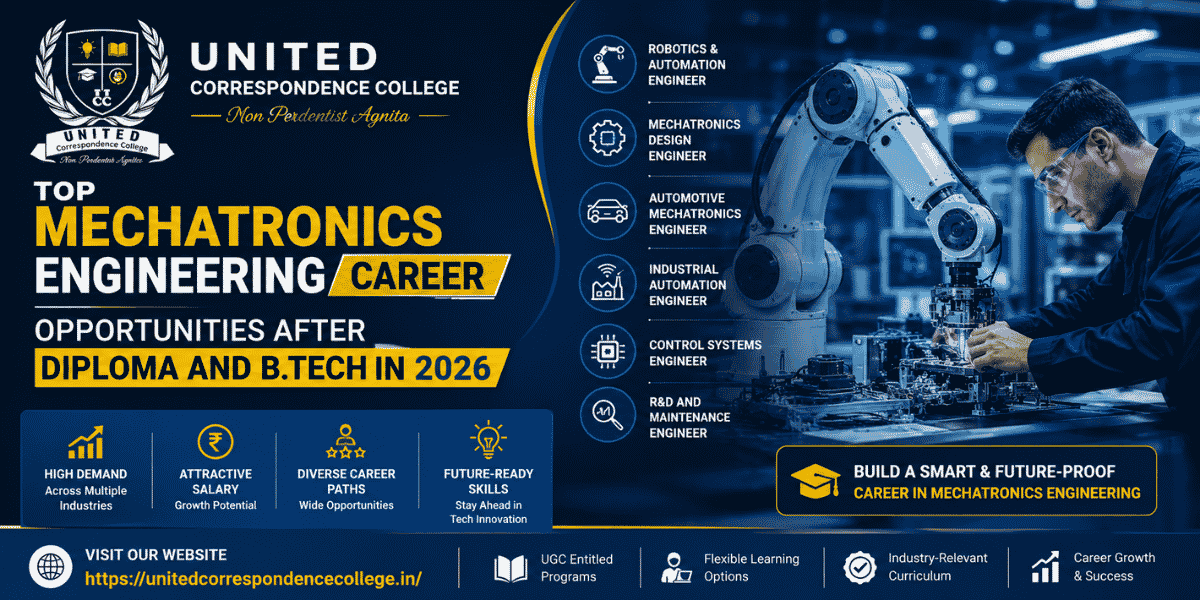
The engineering industry is undergoing a major transformation driven by automation, robotics, Artificial Intelligence (AI), Industrial Internet of Things (IIoT), and smart manufacturing technologies. As companies invest heavily in Industry 4.0 solutions, the demand for professionals with multidisciplinary engineering expertise is increasing rapidly. This is why Top Mechatronics Engineering Career opportunities are becoming some of the most attractive career paths for students in 2026.
A Top Mechatronics Engineering Career combines mechanical engineering, electronics, automation, robotics, and computer programming into one exciting profession. Students looking for a Top Mechatronics Engineering Career can find opportunities in manufacturing, automotive, aerospace, healthcare, renewable energy, and industrial automation sectors. With the growing need for intelligent machines and automated systems, a Top Mechatronics Engineering Career offers excellent salary potential, global opportunities, and long-term job stability.
Whether you complete a diploma or engineering degree, pursuing a Top Mechatronics Engineering Career can position you at the center of technological innovation.
Why Mechatronics Engineering Is Growing Rapidly in 2026?
Modern industries require engineers who can understand both mechanical systems and advanced electronic technologies. Mechatronics professionals are uniquely positioned to bridge this gap.
Several factors are driving demand for mechatronics engineers:
- Growth of industrial automation
- Expansion of robotics applications
- Adoption of smart manufacturing
- Rising demand for electric vehicles
- Industrial IoT implementation
- AI-powered production systems
- Global Industry 4.0 initiatives
These trends continue creating new Top Mechatronics Engineering Career opportunities across industries worldwide.
Why Mechatronics Engineers Are in High Demand
| Industry Requirement | Traditional Engineering | Mechatronics Engineering |
| Automation Skills | Moderate | High |
| Robotics Knowledge | Limited | Strong |
| Electronics Integration | Basic | Advanced |
| Smart Manufacturing | Moderate | High |
| Industry 4.0 Readiness | Medium | Excellent |
What Is Mechatronics Engineering?
Mechatronics Engineering is an interdisciplinary field that combines:
- Mechanical Engineering
- Electronics Engineering
- Computer Science
- Control Systems
- Automation Technologies
Instead of focusing on a single engineering discipline, mechatronics engineers develop intelligent systems capable of performing complex tasks automatically.
As technology evolves, a Top Mechatronics Engineering Career increasingly involves working with robotics, AI systems, sensors, embedded systems, and automation technologies.
Industries Offering Top Mechatronics Engineering Career Opportunities
1. Manufacturing Industry
Manufacturing companies are rapidly implementing smart factory technologies.
Responsibilities include:
- Production automation
- Robotics integration
- Process optimization
- Predictive maintenance
A Top Mechatronics Engineering Career in manufacturing offers excellent growth opportunities due to rising industrial automation investments.
2. Automotive Industry
Automotive companies rely heavily on mechatronics for:
- Electric vehicles
- Advanced driver assistance systems
- Smart sensors
- Autonomous technologies
The automotive sector remains a major employer of mechatronics professionals.
3. Aerospace and Defense
Modern aircraft and defense systems require advanced automation and control technologies.
Mechatronics engineers contribute to:
- Flight control systems
- Aerospace robotics
- Autonomous vehicles
- Defense automation solutions
4. Healthcare Technology
Healthcare organizations increasingly use robotics and intelligent equipment.
Career opportunities include:
- Surgical robotics
- Medical device development
- Healthcare automation
- Smart monitoring systems
5. Renewable Energy
Renewable energy facilities use automation systems extensively.
Mechatronics engineers support:
- Wind turbine automation
- Solar power monitoring
- Smart energy systems
- Grid management technologies
Top Mechatronics Engineering Career Opportunities in 2026
Robotics Engineer
Robotics Engineers design, develop, and maintain robotic systems used across industries.
Key Skills:
- Robotics programming
- AI integration
- Sensor technologies
- Machine vision
Average Salary: ₹6–18 LPA
A Robotics Engineer role remains one of the most exciting Top Mechatronics Engineering Career options.
Automation Engineer
Automation Engineers develop systems that improve efficiency and reduce manual intervention.
Responsibilities include:
- PLC programming
- SCADA systems
- Industrial automation
- Process control
Average Salary: ₹5–15 LPA
Industrial IoT Engineer
Industrial IoT professionals connect machines, sensors, and software to create smart manufacturing environments.
Skills Required:
- Networking
- Cloud computing
- Data analytics
- IoT platforms
Average Salary: ₹6–16 LPA
Embedded Systems Engineer
Embedded Systems Engineers design software and hardware solutions for intelligent devices.
Responsibilities:
- Microcontroller programming
- Hardware integration
- Sensor management
- Device communication
Average Salary: ₹5–14 LPA
Electric Vehicle Systems Engineer
The EV industry is creating thousands of new jobs for mechatronics professionals.
Areas of specialization:
- Battery systems
- Vehicle automation
- Smart mobility
- Power electronics
Average Salary: ₹6–20 LPA
Control Systems Engineer
Control Systems Engineers design systems that monitor and regulate industrial operations.
Industries hiring include:
- Manufacturing
- Aerospace
- Energy
- Automotive
Average Salary: ₹5–15 LPA
AI and Robotics Integration Specialist
Artificial Intelligence is increasingly integrated into robotics and industrial systems.
Professionals work on:
- Machine learning systems
- Intelligent robots
- Autonomous machines
- Smart manufacturing
This emerging role is becoming a highly sought-after Top Mechatronics Engineering Career pathway.
Top Mechatronics Jobs and Salary Range
| Job Role | Core Skill | Average Salary |
| Robotics Engineer | Robotics & AI | ₹6–18 LPA |
| Automation Engineer | PLC & SCADA | ₹5–15 LPA |
| IoT Engineer | Industrial IoT | ₹6–16 LPA |
| Embedded Engineer | Embedded Systems | ₹5–14 LPA |
| EV Systems Engineer | EV Technology | ₹6–20 LPA |
| Control Systems Engineer | Automation | ₹5–15 LPA |
Career Path After Diploma in Mechatronics
Students completing a Diploma in Engr correspondence college in India can begin their careers through technical and operational roles.
Popular Entry-Level Jobs:
- Automation Technician
- Maintenance Engineer
- Robotics Technician
- PLC Programmer
- Quality Control Technician
After gaining experience, diploma holders can pursue advanced qualifications and certifications to access higher-paying roles.
Career Roadmap for Mechatronics Engineers
| Education Level | Career Stage | Typical Roles |
| Diploma | Entry Level | Automation Technician, PLC Programmer |
| B.Tech | Professional Level | Robotics Engineer, Automation Engineer |
| Certifications | Specialized Roles | IoT Engineer, Embedded Systems Engineer |
| M.Tech | Advanced Roles | R&D Engineer, Control Systems Engineer |
| 10+ Years Experience | Leadership Roles | Engineering Manager, Technical Director |
Career Path After B.Tech in Mechatronics
Graduates from a B.Tech correspondence college in India can pursue advanced engineering positions.
Career options include:
- Design Engineer
- Product Development Engineer
- Robotics Engineer
- Industrial Automation Engineer
- Research and Development Engineer
A bachelor’s degree provides broader opportunities for leadership and innovation-focused roles.
Essential Skills for Mechatronics Engineers
To build a successful Top Mechatronics Engineering Career, students should focus on developing the following skills:
Technical Skills
- PLC Programming
- Robotics
- CAD/CAM Software
- Embedded Systems
- Control Systems
- Industrial IoT
- Artificial Intelligence
- Machine Learning
Soft Skills
- Problem-solving
- Communication
- Teamwork
- Project management
- Analytical thinking
Certifications That Boost Employability
Industry-recognized certifications help students stand out.
Recommended Certifications:
- Siemens Automation Certification
- PLC Programming Certification
- ROS (Robot Operating System)
- Industrial IoT Certification
- Embedded Systems Certification
- AI and Machine Learning Certification
Certifications complement academic qualifications and enhance career prospects.
Future Technologies Driving Mechatronics Careers
The future of a Top Mechatronics Engineering Career will be shaped by several emerging technologies.
Industry 4.0
Smart factories will continue transforming manufacturing operations.
Collaborative Robots (Cobots)
Humans and robots will increasingly work together.
Digital Twins
Virtual replicas of physical systems are becoming standard in engineering.
AI-Powered Manufacturing
Artificial Intelligence is improving production efficiency and decision-making.
Smart Mobility
Electric and autonomous vehicles are creating entirely new career opportunities.
How Distance Education Supports Engineering Careers?
Many students today choose flexible learning pathways to balance education and professional commitments.
Programs such as Engineering distance education help learners continue skill development while gaining industry experience.
Students exploring distance education in bangalore often benefit from:
- Flexible schedules
- Career-focused learning
- Cost-effective education
- Professional development opportunities
Institutions such as an Engineering correspondence college in Bangalore provide educational pathways that support working professionals and aspiring engineers.
Students seeking higher qualifications may also explore M.Tech correspondence college in Karnataka programs to strengthen technical expertise and career prospects.
Why UCC Supports Future Engineering Professionals?
As industries evolve, educational institutions must prepare students for modern engineering careers.
UCC focuses on providing flexible educational opportunities that align with industry needs.
Whether students pursue diploma programs, engineering degrees, or professional development courses, UCC supports learners in building strong academic foundations.
With increasing demand for automation, robotics, AI, and smart manufacturing professionals, UCC helps students prepare for future-focused engineering careers.
Conclusion
The future of Mechatronics Engineering has never looked brighter. As industries increasingly adopt automation, robotics, AI, Industrial IoT, and smart manufacturing technologies, demand for skilled professionals continues growing rapidly.
A Top Mechatronics Engineering Career offers exciting opportunities for diploma holders, B.Tech graduates, and engineering professionals seeking long-term growth. From Robotics Engineers and Automation Engineers to Industrial IoT Specialists and EV Systems Engineers, career possibilities are expanding every year.
Students who invest in technical skills, certifications, and practical experience today can position themselves for success in one of the fastest-growing engineering fields of the future.
Ready to Build a Future in Mechatronics Engineering?
Whether you’re pursuing a diploma, engineering degree, or advanced technical qualification, now is the ideal time to develop skills in automation, robotics, and smart manufacturing.
Contact United Correspondence College today to explore flexible learning opportunities and take the next step toward a successful engineering career in 2026.
FAQs
1. Is Mechatronics Engineering a good career in 2026?
Yes, Mechatronics Engineering is considered one of the most promising engineering fields in 2026 due to the rapid growth of automation, robotics, Artificial Intelligence, and smart manufacturing technologies. Industries are increasingly seeking professionals who can work across mechanical, electronic, and software systems. A career in mechatronics offers strong job security, attractive salary packages, and opportunities in emerging sectors such as Electric Vehicles, Industrial IoT, and advanced robotics. Students pursuing studies through an Engineering correspondence college in Bangalore can also build successful careers by combining academic qualifications with technical certifications and practical project experience.
2. What jobs can I get after a Diploma in Mechatronics?
Students who complete a diploma in Mechatronics Engineering can access a wide range of entry-level technical positions across manufacturing, automation, and industrial sectors. Common roles include Automation Technician, Robotics Technician, PLC Programmer, Maintenance Engineer, Production Support Engineer, and Quality Control Technician. These positions provide valuable hands-on experience and opportunities for career advancement. Graduates from a Diploma in Engr correspondence college in India can further strengthen their employability by learning robotics programming, Industrial IoT, and automation technologies. With industry demand growing rapidly, diploma holders can build rewarding careers and continue upgrading their qualifications for higher-level engineering roles.
3. Can B.Tech graduates become Robotics Engineers?
Absolutely. B.Tech graduates are highly qualified to pursue careers in robotics engineering because their academic training covers engineering fundamentals, programming, automation, and system design. Robotics Engineers work on developing intelligent machines, autonomous systems, industrial robots, and AI-powered automation solutions. Students graduating from a B.Tech correspondence college in India can improve their career prospects by learning Python, Robot Operating System (ROS), machine learning, embedded systems, and computer vision technologies. As robotics adoption continues expanding across manufacturing, healthcare, logistics, and defense industries, qualified robotics engineers are expected to remain in high demand for many years.
4. What is the average salary of a Mechatronics Engineer in India?
The salary of a Mechatronics Engineer in India depends on education, technical skills, certifications, and industry experience. Fresh graduates generally earn between ₹5–10 LPA, while experienced professionals working in robotics, automation, Industrial IoT, and AI-driven manufacturing can earn ₹15–25 LPA or more. Engineers with advanced qualifications from an M.Tech correspondence college in Karnataka often qualify for specialized roles with higher compensation packages. As industries continue adopting smart manufacturing and Industry 4.0 technologies, salary growth for mechatronics professionals is expected to remain strong. Continuous learning and certification can significantly improve long-term earning potential.
5. Which industries hire Mechatronics Engineers?
Mechatronics Engineers are employed across numerous industries because their skills combine mechanical engineering, electronics, software, and automation expertise. Major hiring sectors include manufacturing, automotive, aerospace, healthcare technology, renewable energy, logistics, robotics, and Industrial IoT. Smart factories and advanced production facilities particularly rely on mechatronics professionals to optimize operations and improve efficiency. Students pursuing Engineering distance education programs can enter these industries by building practical skills in automation systems, PLC programming, robotics, and embedded technologies. As organizations increasingly adopt automation and intelligent systems, demand for mechatronics engineers continues growing across both domestic and international markets.
6. Is Artificial Intelligence important for Mechatronics careers?
Yes, Artificial Intelligence has become an essential component of modern mechatronics systems. AI enables machines and robots to learn, make decisions, perform predictive maintenance, and adapt to changing environments. Applications such as autonomous vehicles, collaborative robots, smart factories, and industrial automation increasingly depend on AI technologies. Students pursuing education through distance education in bangalore programs can enhance their career opportunities by learning machine learning, computer vision, and AI-based automation tools. As Industry 4.0 continues evolving, employers increasingly seek mechatronics professionals who understand both traditional engineering concepts and advanced AI technologies that power intelligent systems.
7. Can distance education students build careers in Mechatronics?
Yes, distance education students can successfully pursue careers in Mechatronics Engineering when they combine academic learning with practical skill development. Modern employers place significant value on technical competence, certifications, project experience, and problem-solving abilities. Students studying through correspondence degree colleges in bangalore can strengthen their resumes by participating in robotics competitions, automation projects, embedded systems training, and Industrial IoT certifications. Online learning resources and virtual laboratories have made technical education more accessible than ever. With dedication and continuous skill development, distance education learners can compete effectively for opportunities in automation, robotics, manufacturing, and smart technology industries.
8. What certifications are best for Mechatronics Engineers?
Professional certifications help Mechatronics Engineers improve technical expertise and increase employability. Highly valued certifications include PLC Programming, Siemens Automation, Robot Operating System (ROS), Industrial IoT, Embedded Systems, Artificial Intelligence, Machine Learning, and SCADA Systems. These certifications validate practical skills and demonstrate industry readiness to employers. Students studying at a correspondence college in india can use certifications to supplement academic qualifications and gain a competitive advantage in the job market. As technology evolves rapidly, earning certifications also helps engineers stay current with industry trends and enhances opportunities for career growth and higher-paying positions.