
Future of Online Education:Trends to Watch in 2025
The future of online education is not just a prediction—it’s a transformation that’s happening right now. Over the past few years, online learning has evolved from a convenient option to a mainstream method of education, driven by digital innovation and global demand for flexible learning models. As we enter 2025, this transformation is only accelerating.
With rapid advancements in artificial intelligence (AI), immersive technologies, and hybrid learning ecosystems, the future of online learning is set to break barriers, making education more accessible, personalized, and globally connected than ever before.
The Evolution of Online Learning in the Future
Gone are the days when online classes meant watching pre-recorded videos and taking basic quizzes. The future of online education is all about engagement, adaptability, and inclusivity.
Today’s learners expect education to fit into their busy lifestyles without compromising quality. Institutions, in turn, are reimagining their strategies—adopting AI tools, gamification, and adaptive platforms that make learning more interactive.
In 2025, online learning in the future will focus on three key pillars:
- Personalization – Courses that adapt based on student performance and preferences.
- Collaboration – Global, interactive classrooms that connect learners across continents.
- Accessibility – Mobile-friendly and inclusive learning tools for everyone, regardless of location or background.
This evolution signals a shift from passive learning to dynamic, engaging, and purpose-driven education.
Emerging Trends Defining the Future of Online Education
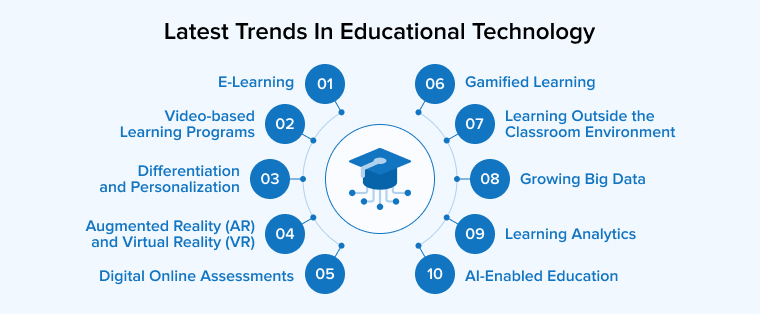
Let’s explore the most impactful trends shaping the future of online education in 2025 and beyond.
Artificial Intelligence (AI) and Personalized Learning
AI is at the heart of the next educational revolution. Intelligent learning platforms are becoming mentors that understand individual needs, learning speeds, and strengths.
In the future of online learning, AI will recommend personalized study plans, evaluate progress instantly, and provide targeted feedback. This creates an environment where every learner feels guided—almost like having a private tutor available 24/7.
AI-driven chatbots will also enhance student support by answering queries instantly and connecting learners to resources, improving both engagement and satisfaction.
Virtual Reality (VR) and Immersive Learning Experiences
In the future of online education, traditional PowerPoint lessons are being replaced with virtual reality-based simulations and immersive experiences.
Students can now explore ancient civilizations, perform virtual lab experiments, or attend 3D business meetings—all from home. This hands-on digital environment makes complex subjects easier to grasp and retains students’ attention for longer.
For example, medical students can practice surgeries in VR before entering real operating rooms—making online learning in the future both safer and more practical.
Microlearning and Future Learn Online Courses
Microlearning focuses on small, manageable chunks of information that can be learned in short sessions. It’s ideal for busy professionals or students balancing multiple commitments.
In 2025, future learn online courses will continue to expand with short-term certifications and job-specific programs that promote continuous skill development. These modules help learners upskill efficiently while keeping pace with industry changes.
The popularity of microlearning reflects a global shift toward outcome-based education—where learners prioritize skills that directly boost career opportunities.
Data Analytics and Predictive Learning
One of the most powerful innovations shaping the future of online learning is predictive analytics. By tracking student data—like time spent on lessons, quiz performance, and participation—platforms can identify learning gaps early and suggest corrective steps.
Educators benefit too, gaining insights into student behavior, performance, and engagement trends. This data-driven approach ensures every learner receives customized support for better outcomes.
Hybrid Learning Models: The Best of Both Worlds
The future of online education doesn’t eliminate traditional learning—it enhances it. Hybrid models blend in-person and virtual experiences, offering flexibility and interaction simultaneously.
For example, a student might attend theory classes online but participate in physical workshops or internships for practical exposure. This balance promotes holistic learning and bridges the gap between theory and application.
Blockchain for Secure Credentialing
With the increasing number of online certifications, verifying authenticity is vital. Blockchain technology ensures that academic credentials are secure, transparent, and tamper-proof.
In the future of online learning, blockchain-based certificates will allow employers to verify qualifications instantly—improving trust and reducing fraud in education.
Global Collaboration and Cross-Cultural Learning
In 2025, online education will not just connect students—it will connect nations. Learners will collaborate across borders, participating in international projects and discussions that broaden perspectives.
This global exposure fosters cultural understanding, innovation, and teamwork—skills essential in a globally connected workforce. The future learn online courses will thus serve as bridges between diverse minds and markets.
Advantages of Embracing the Future of Online Education
| 🌈 Advantage | 💡 What It Means | 🎯 Why It Matters |
| Flexibility & Accessibility | Learn anytime, anywhere—from early mornings to late nights. | Perfect for working professionals and international learners, removing all time and location barriers. |
| Cost-Effective & Scalable | Digital platforms reduce infrastructure costs while reaching global learners through future learn online courses. | Affordable education that scales without compromising quality. |
| Personalized & Adaptive Learning | AI-powered tools analyze performance to tailor learning paths. | Boosts engagement, comprehension, and motivation with a customized approach. |
| Lifelong Learning & Career Growth | Supports continuous education for mastering skills and leadership development. | Keeps learners relevant in fast-evolving industries. |
| Eco-Friendly & Sustainable | Less commuting, less paper, lower carbon footprint. | Promotes sustainable, environmentally conscious learning practices. |
Challenges and Solutions in the Future of Online Learning
While the future of online education is promising, it also presents unique challenges that must be overcome for long-term success.
| Challenge | Description | Solution |
| Digital Divide | Limited internet and devices in some regions. | Use low-data apps, community centers, and gov-supported initiatives. |
| Engagement & Motivation | Virtual fatigue lowers participation. | Gamify learning, add quizzes, and interactive forums. |
| Quality Assurance | Maintaining credibility with rapid growth. | Set standards, use AI evaluation, and regular audits. |
| Data Privacy | Risk of breaches and identity theft. | Use encryption, blockchain, and strong security protocols. |
(FAQs)
- What is the future of online education in 2025?
It’s an AI-powered, flexible, and globally connected learning system offering personalized and immersive experiences. - How will AI improve online learning in the future?
AI will personalize content, predict performance, and offer real-time feedback for each learner. - Are online degrees valuable for future employment?
Yes, with blockchain verification and institutional recognition, online degrees hold strong credibility. - What are the benefits of future learn online courses?
They’re affordable, skill-based, and designed for quick career growth through flexible learning. - Will traditional education disappear with the rise of online learning?
No, but it will evolve into hybrid models blending digital innovation with in-person learning.
The future of online education in 2025 marks a smarter, more inclusive, and connected learning era. It’s not about replacing classrooms—it’s about enhancing them with innovation. AI, VR, and blockchain are reshaping education, giving learners greater freedom, control, and opportunities. The future of online learning will empower, inspire, and connect global learners.
📚 United Correspondence College (UCC)
United Correspondence College (UCC) is leading this transformation with flexible, accredited, and industry-relevant online programs. Their offerings include B.Ed, M.Ed, B.Tech, and M.Tech courses, designed for working professionals and lifelong learners.